
katabatic
- adjective
- /ˌkætəˈbætɪk/
- Specialized
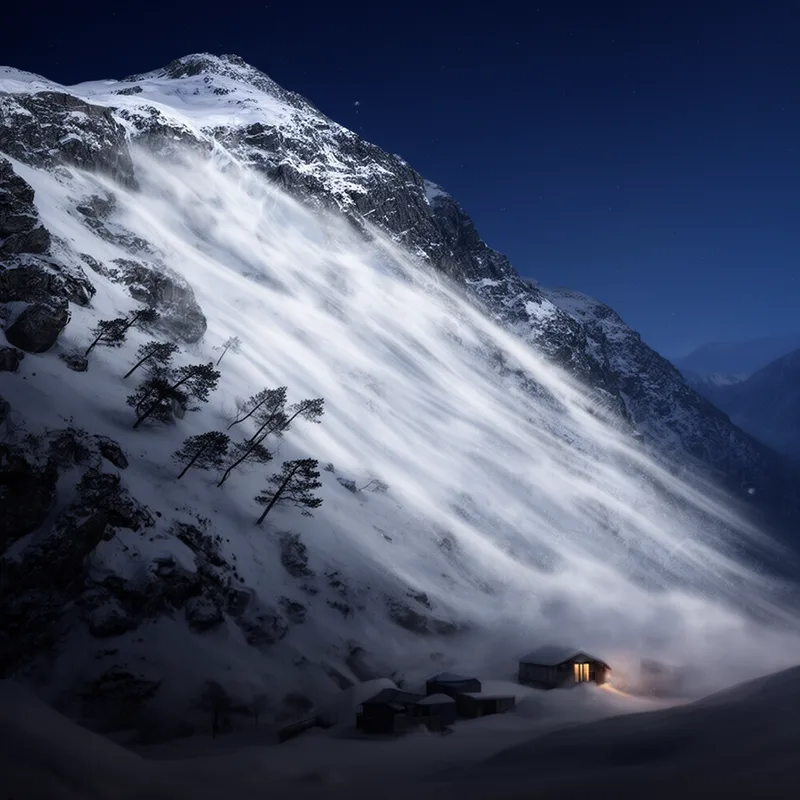
- As a result of these katabatic winds, some Antarctic coasts are among the world's windiest places.
- katabatic winds
Examples
-
The katabatic winds from the mountains brought a sudden chill to the valley during the night.
-
Farmers in the area must prepare for the harsh katabatic winds that can arrive after sunset.
-
Rachel Falconer notes that the important question arising out of katabatic narratives is whether anything of value has been gained from the descent into hell.
Academic text (2008) -
At a regional scale, the dry valley soil legacies interact with valley climate, which is determined by elevation, orientation of the valley in relation to katabatic winds, distance from marine ecosystems, and local topography, resulting in a spatial distribution of soil habitats that are suitable or not suitable for soil life.
Academic text (1999) -
We observed how the katabatic airflow shaped the landscape as it rushed down the slope.
Synonyms

A cold wind that moves down a slope, usually at night
Antonyms

Compounds

Surface Forms
Morphology
katabatic = kata + bat + ic
Although analyzable into Greek-derived parts ('kata-' = down + root + '-ic'), these morphemes are not productive or familiar to an average B1 learner, so the meaning 'downward wind' is not reliably derivable from the parts.
Etymology
Katabatic comes from Greek parts kata- 'down' and -batic from a root meaning 'to go'. So a katabatic wind is a wind that 'goes down' a slope, often at night when cooler air flows downhill.

