
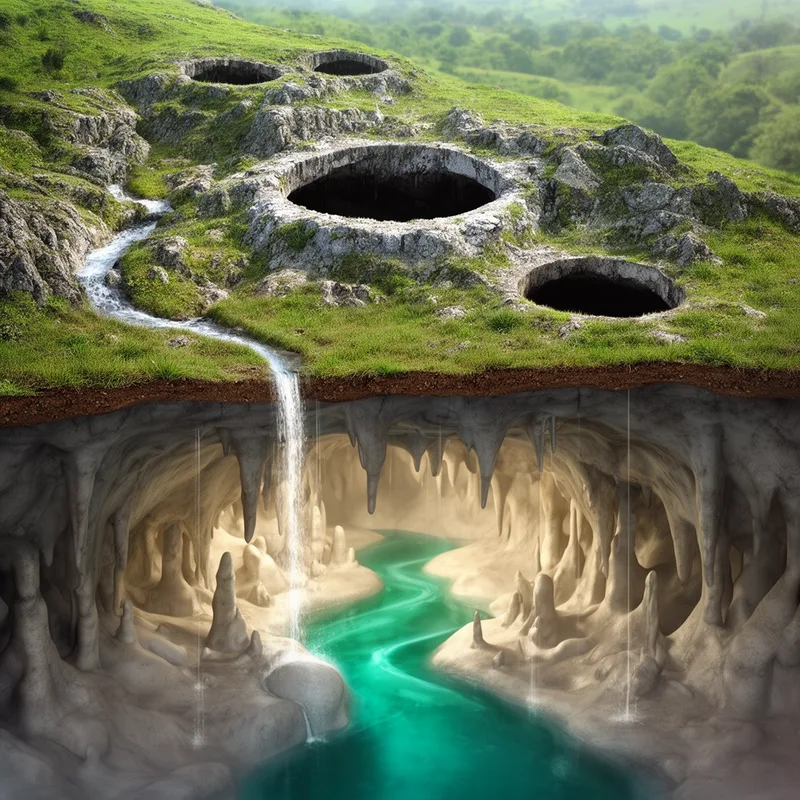
karst


 1
8.6
- adjective
- /kɑrst/
- Specialized
- The uplands are covered with karst features such as dolines and steep karst hills.
- karst features
Examples
-
It's made up of karst limestone formations.
Blog text (3) -
The stony, rugged land displays the classic erosional features of a karst landscape.
Academic text (1997) -
The dramatic karst peaks along the nearby Li River are a big tourist draw, while the hotel itself has comfortable, simple rooms.
Blog text (32) -
This vast karst landscape of limestone plateaus and more than 700 caves is home to the world's highest stalagmite.
Blog text (31) -
The limestone bedrock is easily dissolved over time, creating karst features such as caves, sinkholes, and complex underground drainage systems.
Academic text (2011) -
The Dinaric karst, highly porous limestone highlands, form a natural border between the inland of the Balkan Peninsula and the Dalmatian coast.
Academic text (1993) -
Marble is relatively rare in nature, and as a carbonate rock, it is subject to karst formation and subsurface drainage, leaving little surface runoff to deliver sediment to streams and eventually to the coast.
Academic text (2008) -
The stony, rugged land displays the classic erosional features of a karst landscape.
-
The uplands are covered with karst features such as dolines and steep hills.
-
Narrow, rugged, and often a cliff-hanger, the palmetto-lined trail showcases the karst terrain of Suwannee at its best.
Synonyms
 1
9.6
Landscapes that form when water wears away certain rocks, often with caves
Surface Forms
Etymology
Karst as an adjective comes from the same place name Kras, which means 'rocky' and was used for areas full of caves and sinkholes. That's why calling a landscape 'karst' describes land shaped by water in soft rock, like caves and sudden holes.