
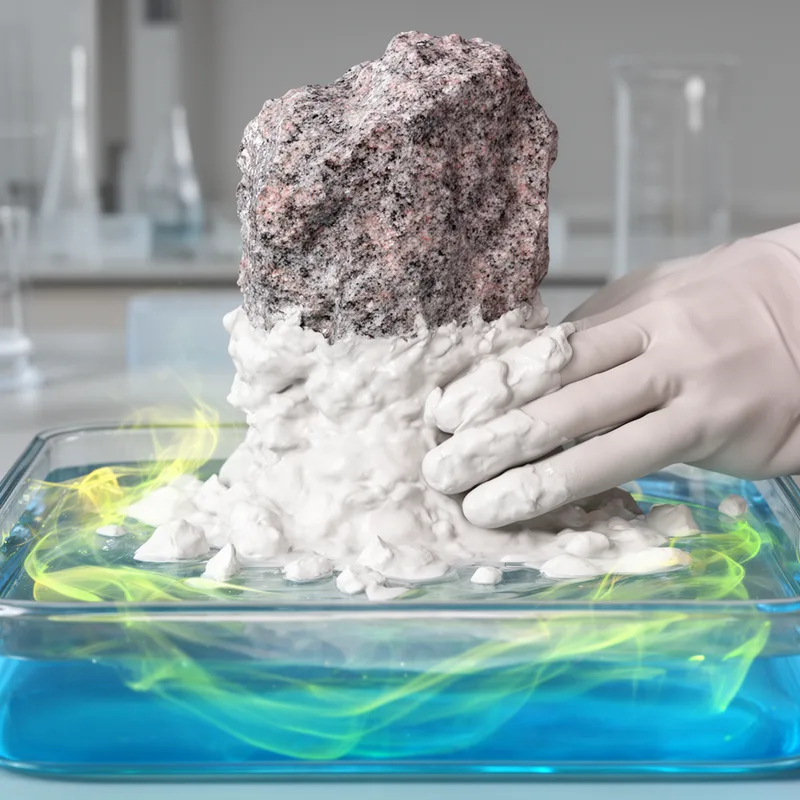
to kaolinize
- verb
- /ˈkeɪəˌlɪnaɪz/
- Specialized
- Certain minerals kaolinize when exposed to acidic groundwater over long periods.
Examples
-
Geologists observed that the granite had begun to kaolinize due to weathering.
-
They kaolinized the rock samples for further analysis.
-
The process to kaolinize feldspar is important in the formation of clay deposits.
-
The process will kaolinize the granite over time.
-
Certain minerals kaolinize when they undergo chemical weathering in acidic conditions.
-
Geologists studied how prolonged exposure to water can cause feldspar to kaolinize.
-
The constant humidity in the area helps to kaolinize the surrounding rocks into clay.
Synonyms


 1
7.4
To become hard as minerals collect inside things like bones
Surface Forms
Morphology
Etymology
Kaolinize comes from kaolin, the name for a soft white clay first found near the Chinese place 'Gaoling', which means 'high ridge'. To kaolinize something is to change a rock or mineral into that white clay used for porcelain, so the word means 'to turn into kaolin'.