
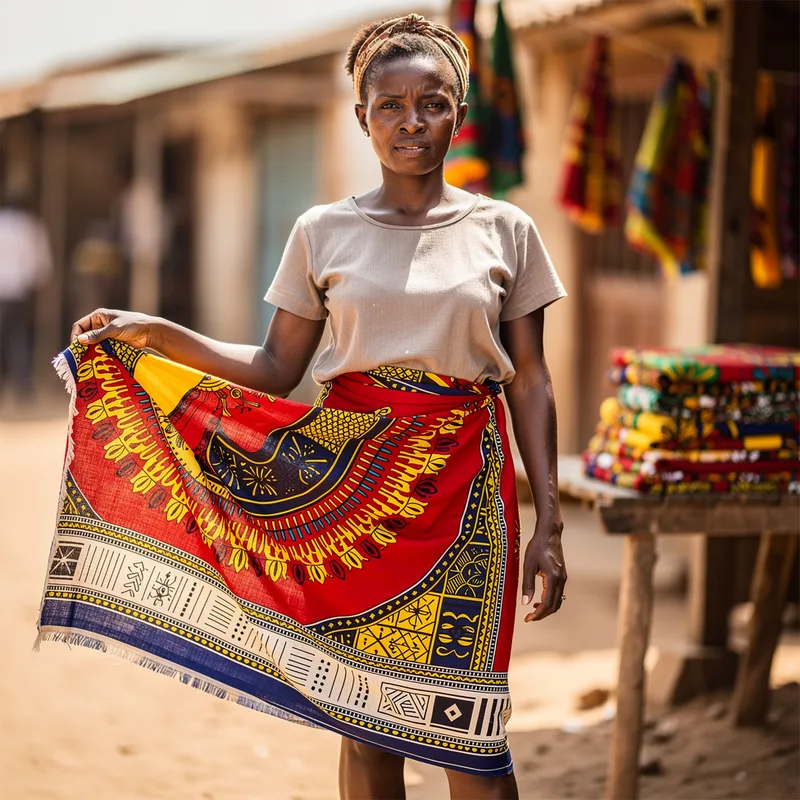
kanga


 1
8.8
- noun
- /ˈkæŋɡə/
- UK
- In East Africa, women often express their identity through the vibrant designs of their kanga.
Examples
-
Oh, poor kanga.
-
You're like a human-kanga hybrid.
-
Also, women could wear a kanga with a suitable meaning when visiting a person's house as a means to communicate their message.
Academic text (2006) -
He had thought it would be farther away, but before he had always been driving a kanga.
Fiction book (1990) -
In kanga cloth (worn by women), for example, each pattern had a name with a specific meaning.
Academic text (2006) -
These included wax- and roller-print (or "fancy") textiles made for the West and Central African markets, as well as kangas made to be sold in East and Southern Africa.
Academic text (1996) -
He gets up, still hugely naked, and wraps his sharp-boned hips, as narrow as a dancer's, in a faded kanga.
Fiction book (1990) -
Woven basketwork turns up repeatedly in minkisi, as do knots, nets, and weaver-bird nests, all embodiments of the verb kanga, "to arrest, tie up," and intended to trap evil influences.
Academic text (2002) -
The bright colors of her kanga made her stand out at the market.
-
She wrapped her kanga around her waist, feeling both stylish and comfortable.
Synonyms
 1
9.9
A cloth made from tree bark used for clothes and decoration in the Pacific islands

A thin, light fabric made from pineapple leaves and woven by hand in the Philippines
Surface Forms
Etymology
Kanga comes from the East African Swahili word kanga, meaning 'a bright printed cotton wrap' worn by women. Many kanga cloths have a short saying printed along the edge, so a helpful way to remember the word is as a 'wearable poster' or 'message cloth'.