
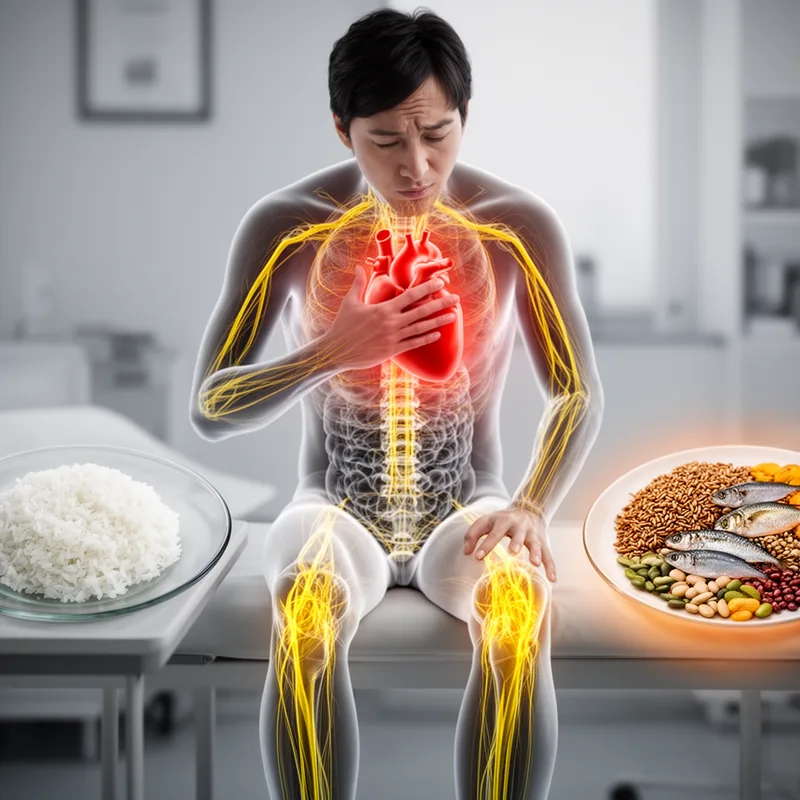
kakke disease
- noun
- Specialized
- Researchers discovered that kakke disease was caused by a severe deficiency of vitamin B1.
Examples
-
Cases of kakke disease decreased significantly after the introduction of thiamine-rich foods.
-
Historically, kakke disease was a major public health issue in Japan in the late nineteenth century.
-
Many people in rural Japan suffer from kakke disease.
-
Is kakke disease common in East Asia?
-
Historically, kakke disease was a significant concern in Japan due to thiamine deficiency.
-
Many people in rural Japan suffered from kakke disease before thiamine-rich foods became widely available.
-
Cases of kakke disease have declined thanks to increased awareness about vitamin B1 deficiency.
Synonyms

 1
9.4

A disease from lack of vitamin B1 that causes body weakness and problems with nerves and the heart
Surface Forms
Morphology
kakke + disease
The element 'disease' makes it immediately clear that this is a medical condition, so a learner who knows both constituents would at least infer it is some kind of illness. However, 'kakke' is a language-specific lexical name (not analyzable from English morphemes) and gives no information about the specific etiology or that it is beriberi caused by thiamine deficiency, so the full meaning is not predictable from the parts.
Etymology
Kakke disease comes from the Japanese word kakke meaning 'leg illness', because this sickness often made people's legs weak and swollen. So the name refers to the form of beriberi caused by a lack of vitamin B1, which leads to that 'weakness' in the legs.