
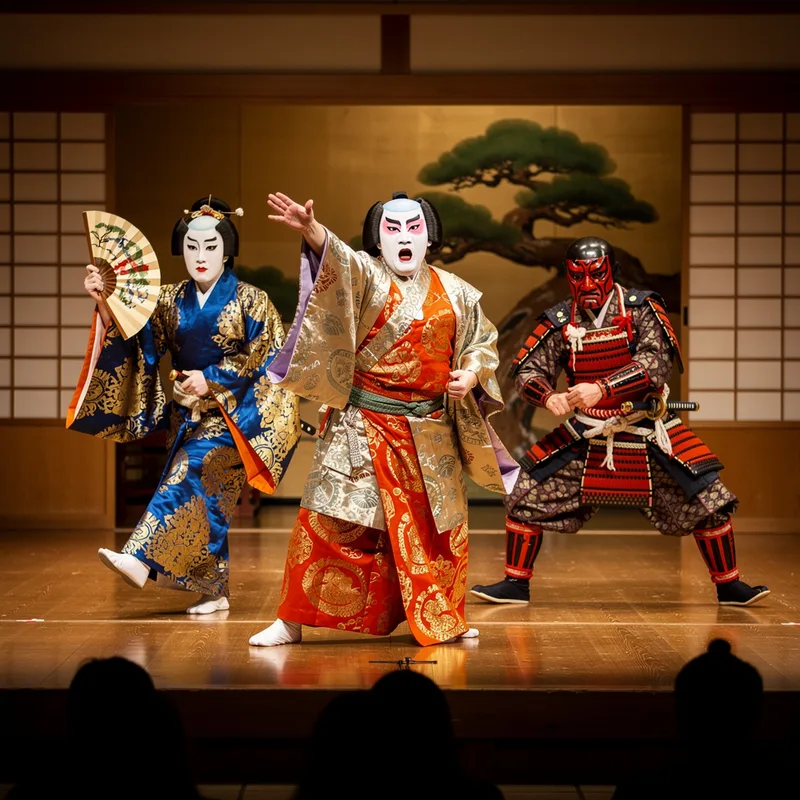
kabuki
 3
8.6
3
8.6

- noun
- /kəˈbuːki/
- Last night, we enjoyed a mesmerizing kabuki performance that showcased traditional Japanese arts.
- kabuki theater
- kabuki dance
Loading YouTube…
Watch on YouTubeSo one of the first dances that my Kabuki sensei taught me is Sakura.
- So one of the first dances that my Kabuki sensei taught me is Sakura.
- This is not if I can vary the Asian analogy to slightly this is not kabuki theatre.
Examples
-
They have a whole tradition of kabuki, geishas, cherry blossoms, kind of nature in general.
-
The intricate movements and vibrant costumes in kabuki truly highlight the beauty of Japanese theater.
-
OR expand your knowledge of Japanese culture with this video on Kabuki dance drama.
-
Right now you look like an actor in a kabuki troupe.
-
It's just the way of concentrating an audience's attention, like um, a Japanese form of movement, like kabuki theater.
-
This ritual at times resembled kabuki theater, but it was crucial in resolving many tense trade problems, from Japanese automobile exports to American access to the Japanese telecommunications market.
Academic text (1991) -
In Tokyo, you can experience authentic kabuki, which combines stunning costumes with dramatic storytelling.
Compounds

How Stylized

Surface Forms
Etymology
Kabuki comes from the Japanese verb kabuku, which means 'to act strangely' or 'to stand out'. It named a style of theatre with bold acting, singing, dancing and bright costumes, so kabuki means that traditional dramatic show.