
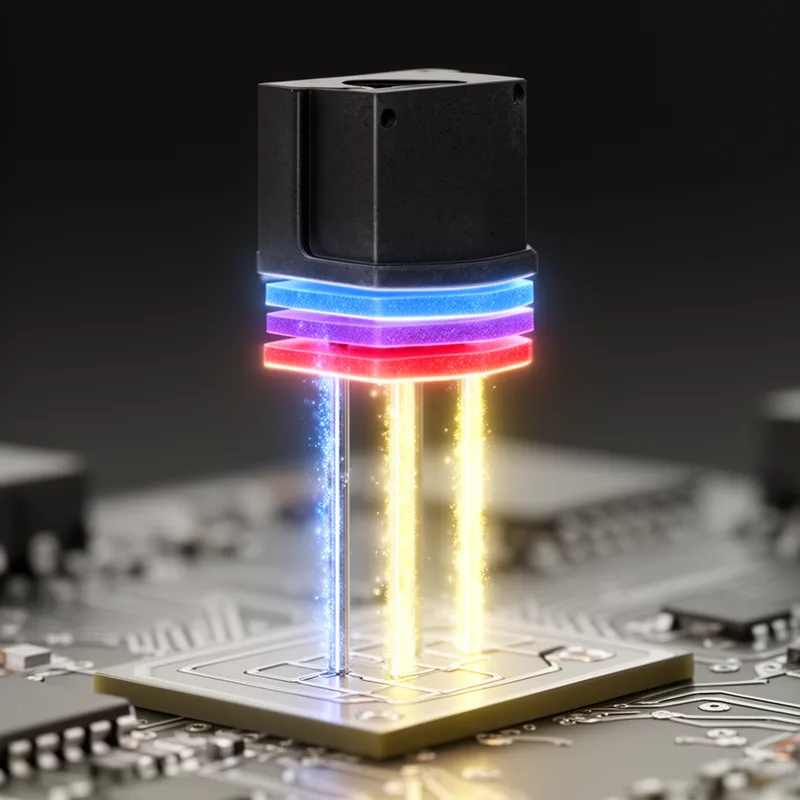
junction transistor
- noun
- /ˈdʒʌŋkʃən trænˈzɪstər/
- Specialized
- Many modern devices rely on a junction transistor for switching electronic signals with precision.
Examples
-
A junction transistor can be used in various applications, such as in radios and computers for signal processing.
-
One is the bipolar junction transistor, the BJT, and works through a complete example from start to finish involving a circuit containing A bipolar junction transistor.
-
The engineer designed a circuit using a junction transistor to efficiently amplify the audio signal.
Synonyms

 28
5.1
28
5.1

A small electronic part that controls or makes electrical signals stronger

A small electronic part with three layers that controls and increases electric current
Surface Forms
Morphology
The noun–noun compound is fully compositional: a B1 learner who knows 'transistor' (a semiconductor device) and 'junction' (where two things meet) can infer this refers to a transistor characterized by p–n junctions. This follows a regular, cross-linguistically common technical naming pattern, so the basic meaning is directly derivable from the constituents even if deeper technical details require specialist knowledge.
Etymology
Junction transistor is named for the junctions, the places where different special layers of material join inside the transistor. Think of the junctions as small doors that let a tiny signal control a larger flow of electricity, so the device can 'make a signal stronger' or 'turn a signal on or off'.