
juglone
- noun
- /ˈdʒʌɡloʊn/
- Archaic
- She extracted juglone from walnut husks to create a homemade dye for her project.
Examples
-
Some artists prefer juglone for staining fabrics because of its rich, earthy tone.
-
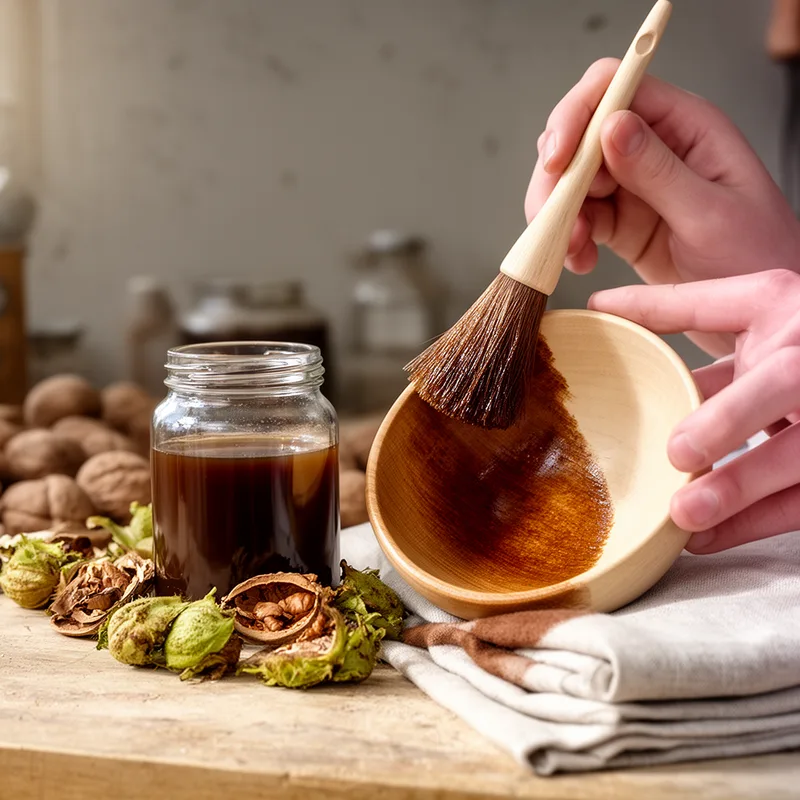
The craftsman used juglone to give the wooden bowl a deep, natural brown color.
-
The artist used juglone to dye the fabric.
-
Many craftsmen appreciate the rich color of juglone.
-
The craftsman used juglone to give the wooden bowl a deep, natural brown color.
-
Some artists prefer juglone for staining fabrics because of its rich, earthy tone.
-
She extracted juglone from walnut husks to create a homemade dye for her project.
Surface Forms
Morphology
juglone = jugl + one
Formed from a Latin combining form referring to walnut (jugl-) plus the chemical suffix '-one'; the combining form is not a recognizable English base for most learners, so the meaning cannot be derived transparently.
Etymology
Juglone comes from the Latin word juglans, which means 'walnut' and originally meant 'Jupiter's acorn'. Because of this origin, the name fits a deep brown dye made from walnut husks that stains cloth and wood.

