
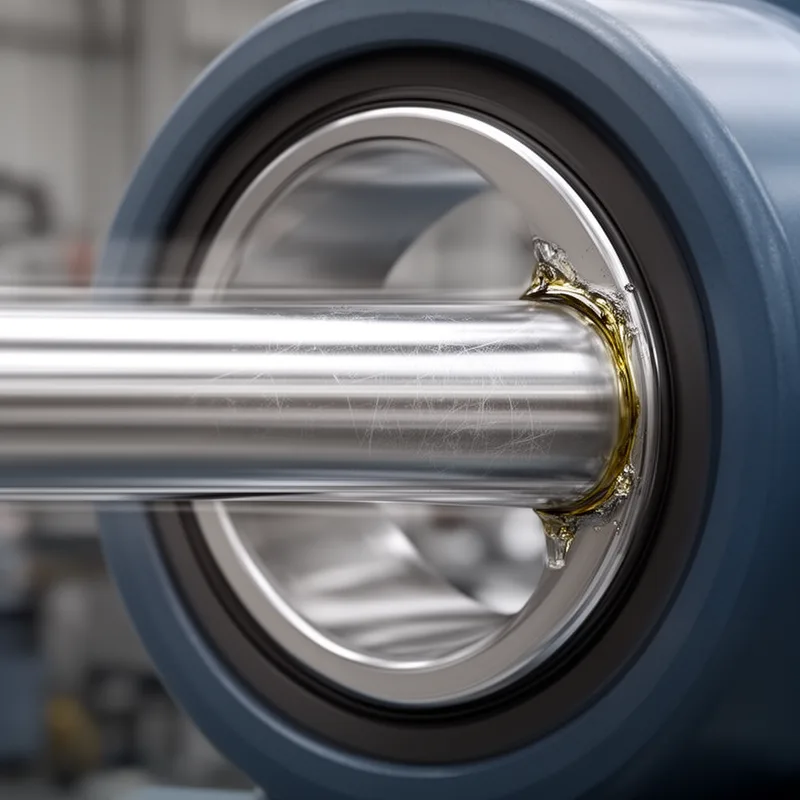
journal
 2
8.9
2
8.9

- noun
- /ˈdʒɜrnəl/
- Specialized
- To prevent excessive wear, it is crucial to monitor the condition of the journal where it makes contact with the bearing.
- journal bearing
Examples
-
They can be modified with keyways or journal ends for bearing mounts.
Academic text (2002) -
Bearing journal friction is 0.005.
Academic text (1994) -
The tilting-pad journal bearings provide fine vibration damping.
Academic text (1994) -
The integral shaft bearing seals protect the journal areas from sedimentation, mineral deposits, and corrosion particles.
Academic text (1997) -
In early Russian trains, it was common practice to use lard for lubricating journal bearings instead of the mineral oil more commonly used in the West.
Academic text (1998) -
Kawasaki designers built a single-shaft rotor equipped with two journal bearings to facilitate alignment.
Academic text (1994) -
Bearings used with early wheels and axles were of plain form (journal bearings), in which a journal or shaft is fitted with a close clearance in a sleeve.
Academic text (2003) -
In mechanical systems, the friction between the shaft and the journal leads to wear and requires regular maintenance.
-
The technician inspected the journal bearings to ensure they were properly lubricated for optimal performance.
Compounds

- Specialized

 1
6.0
1
6.0
A support for a rotating metal rod that uses oil to reduce rubbing
- Specialized
A metal case that holds the bearing that helps a wheel turn on trains and machines
Surface Forms
Etymology
Journal in machines names the part of a shaft that turns inside a bearing. A helpful way to remember this is to link it to the old root diurnalis 'daily' as a memory hook: the journal is the moving part that turns regularly.