
jitterbug
 6
8.4
6
8.4

- noun
- /ˈdʒɪtərˌbʌɡ/
- Archaic
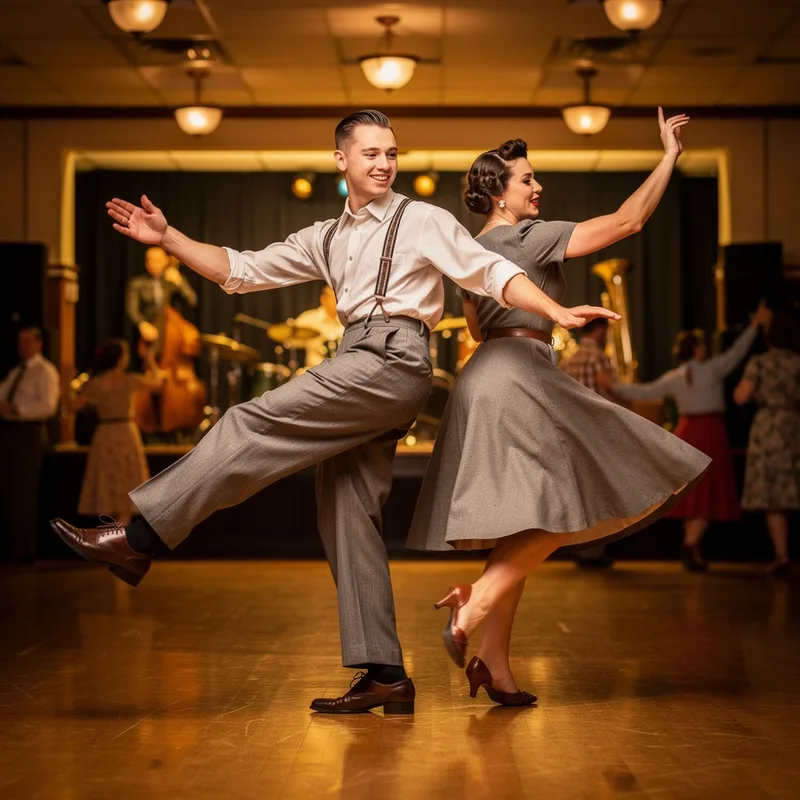
- The jitterbug was a favorite dance at the 1940s parties, with its fast, lively movements.
Examples
-
Whether it's ballet or the jitterbug, dancing isn't just beautiful, it's weight bearing exercise.
-
Don't you remember doing the jitterbug with me in the kitchen?
-
I could dance a jitterbug, if it would help me get on that boat.
-
A jitterbug song comes on, and so does Adam.
Fiction book (1999) -
The jitterbug contest just started.
-
It's been a while since Eileen did the jitterbug or Bob hit the golf course.
Blog text (18) -
She claims to be a champion jitterbug.
-
Mama's bellowing to one side of me; some women are doing the jitterbug in the aisle.
Fiction book (2002) -
In one of her early articles, Pitts addressed the then-popular music and dance phenomenon known as the jitterbug.
Academic text (2007) -
And it would just be people dancing to classical jazz music, doing swing dances, jitterbug, Lindy Hop, all the dances that you imagine when you think about the origins of jazz dance.
How Fast

Surface Forms
Morphology
Etymology
Jitterbug comes from two simple parts: jitter ('to shake' or 'nervous movement') and bug ('small insect' or someone taken by a craze). Picture a tiny, nervous insect jumping quickly — that helps you remember the fast, jerky dance that was popular in the 1940s.