
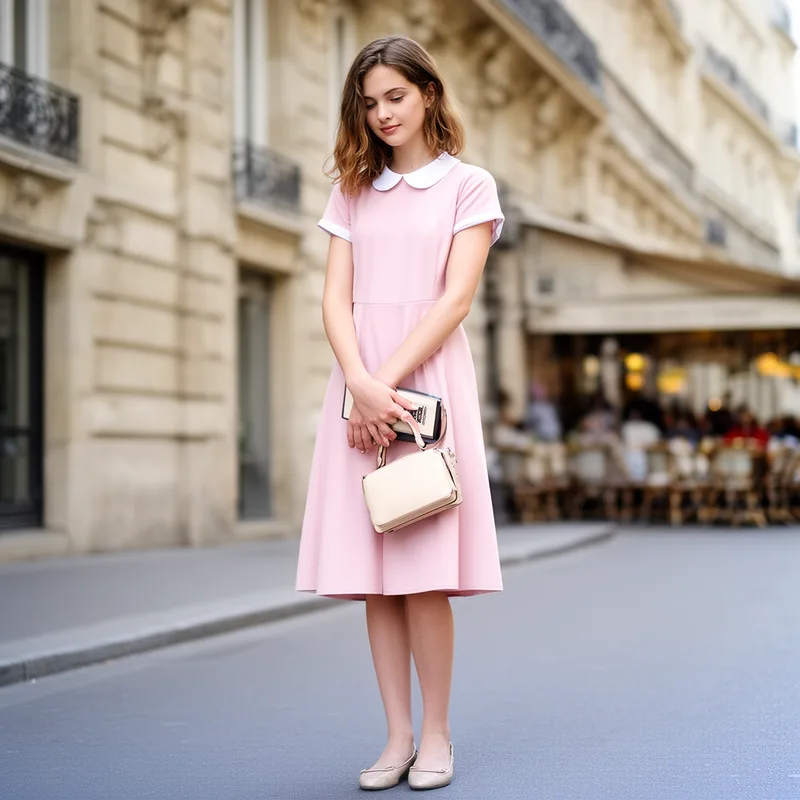
jeune fille
- noun
- /ʒɶn fiː/
- Literature
- The novel's protagonist was a shy jeune fille navigating Parisian society.
Examples
-
In old French films, the innocent jeune fille often contrasted with the sophisticated femme fatale.
-
In the novel, the jeune fille dreams of becoming an artist.
-
She wore a dress in the jeune fille style popularized by French designers.
-
The jeune fille danced gracefully at the festival.
-
In old French films, the innocent jeune fille often contrasted with the sophisticated femme fatale.
-
The novel's protagonist was a shy jeune fille navigating Parisian society.
-
In the novel, the jeune fille dreams of becoming an artist.
Synonyms

 53
8.2
53
8.2

A French word for a young or unmarried woman
 41
4.8
41
4.8
A girl or young woman
 35
9.5
35
9.5
A Scottish word for a girl or young woman


 1
9.9
1
9.9
A young unmarried woman in old stories

A young unmarried woman in old stories

A young unmarried woman who appears in old stories
Surface Forms
Morphology
jeune + fille
The phrase is a straightforward adjective + noun composition: 'jeune' = young and 'fille' = girl, so a learner who knows both constituents can readily infer 'young girl' (or in some literary contexts 'young/unmarried woman'). This compositional pattern is cross-linguistically common, so despite a slight cultural nuance about unmarried status in some uses, the meaning is transparently derivable from the parts.
Etymology
Jeune fille comes from the French words jeune and fille, which mean 'young' and 'girl'. In old books and films the term named an innocent, unmarried young woman, so today jeune fille still suggests youth and being 'unmarried'.