
jasmonate


 1
9.6
- noun
- /ˈdʒæzməˌneɪt/
- Specialized
- Adventitious root formation (Fattorini et al. 2009) and inhibition of root elongation are examples of jasmonate-promoted processes (Staswick et al. 1992).
- methyl jasmonate
Examples
-
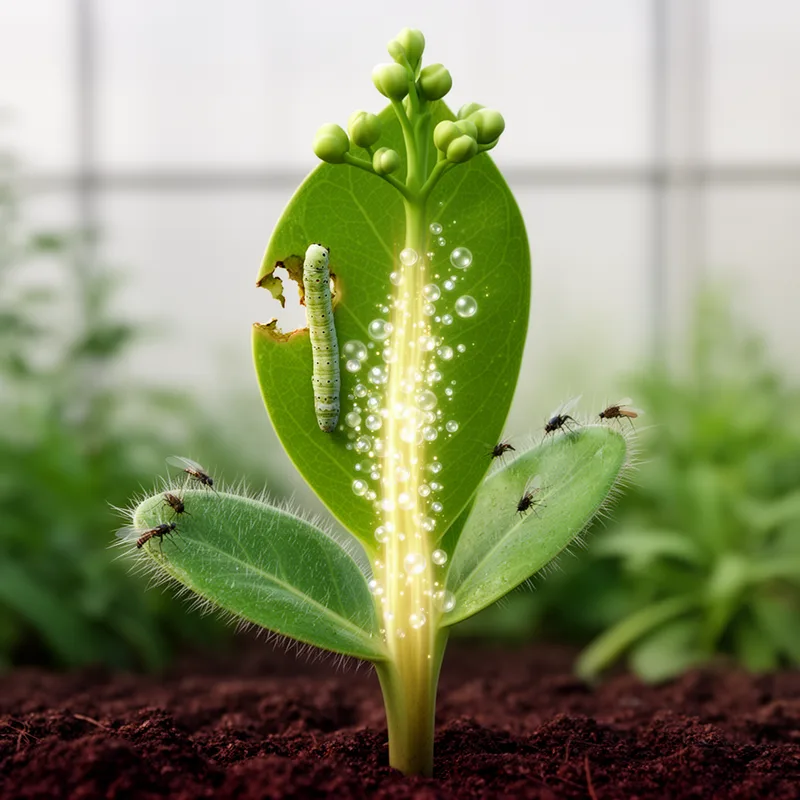
When a leaf is damaged, the plant produces jasmonate to help regulate its defense mechanisms.
-
But his best success came when he found that sweet-smelling methyl jasmonate protected zucchini squash, sweet peppers, and grapefruit from chilling injury and doubled their shelf life.
Academic text (1998) -
How does methyl jasmonate work?
Academic text (1998) -
"We thought that methyl jasmonate might induce a similar response."
Academic text (1998) -
And methyl jasmonate elicits the same response in harvested produce, which is still-living tissue, as it does in growing plants.
Academic text (1998) -
Buta and Moline have successfully used methyl jasmonate to slow down gray mold on grapes.
Academic text (1998) -
Buta says that methyl jasmonate elicits compounds in living plants that make them more resistant to temperature changes and attacks by insects, bacteria, and fungi.
Academic text (1998) -
Squash treated with methyl jasmonate showed no deterioration from cold-storage temperatures for up to 8 days, while untreated squash started to deteriorate after just 4 days.
Academic text (1998) -
Cullar Prez and Goossens (2013) pointed out the similarity between the signaling of jasmonates and auxin and discussed their interaction in a recent review.
Academic text (2015) -
The application of jasmonate can enhance a plant's ability to cope with environmental stress.
Surface Forms
Morphology
jasmonate = jasmonic acid (semi-transparent) = jasmon + ate
The suffix '-ate' indicates a salt or ester, but the root 'jasmon' is not a standalone English word, making it semi-transparent.
Etymology
Jasmonate comes from jasmine, because the related acid was first found in jasmine oil, and the chemical ending -ate shows it is a 'salt' or 'related form' of that acid. So jasmonate is the plant chemical that helps control growth and defence.