
isopropanol


 1
7.0
1
7.0
- noun
- /ˌaɪsəˈproʊpəˌnɔl/
- Specialized
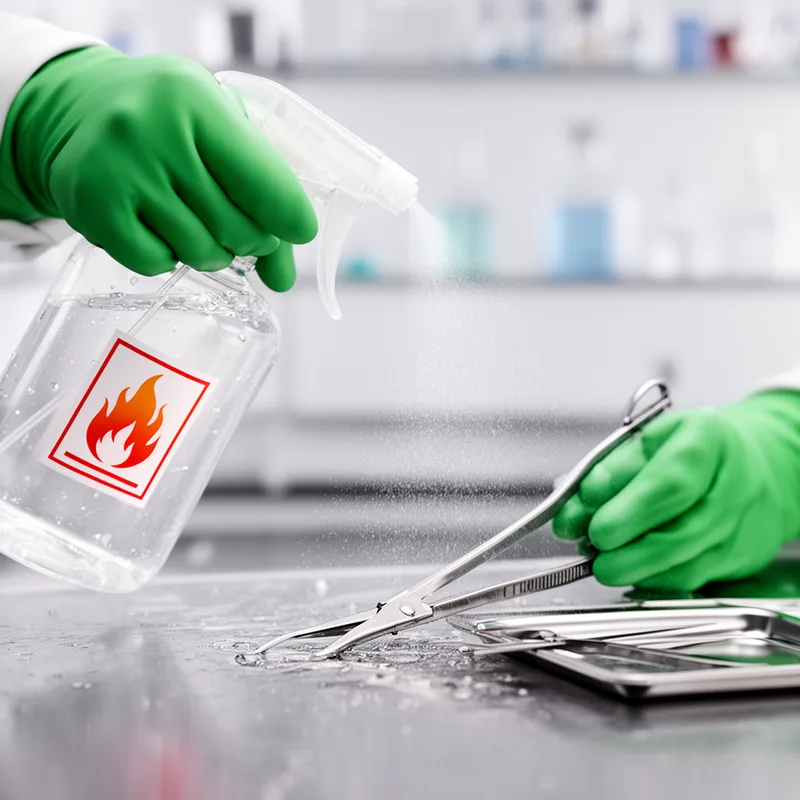
- isopropanol is commonly used as a disinfectant because it effectively kills bacteria and viruses.
Examples
-
So we'll sort of turn our efforts up a little bit here and we'll go to the isopropanol and see how this does.
-
Alcohols (ethanol, isopropanol); 60 to 90%; B, V, F; nonstaining, nonirritating; inactivated by organic matter, highly flammable.
Academic text (1994) -
Sections were then air-dried, fixed with formalin, and stained with Oil Red O in 60% isopropanol to observe lipid deposition.
Blog text (6) -
The Dutch turned them down, as ICI had, but they still bought two uncontrolled chemicals at that time: dimethylamine for making Tabun and isopropanol for Sarin.
Fiction book (1994) -
Formazan crystals were solubilized in 10% Triton X-100 and 0.1 N HCl in anhydrous isopropanol after repeated pipetting.
Academic text (2016) -
You can use isopropanol to clean the glass surfaces in your home for a streak-free shine.
-
For a quick hand sanitizer, mix aloe vera gel with isopropanol to create an effective topical solution.
Synonyms
 6
3.4
6
3.4
A liquid used on skin or surfaces to kill germs and clean
 1
4.1
1
4.1
A clear liquid that burns easily and cleans skin, kills germs, and removes grease
Surface Forms
Morphology
isopropanol = propanol (opaque) = iso + prop + anol
The prefix 'iso-' indicates a specific isomeric form, but the overall meaning is not transparent to learners without chemical knowledge.
Etymology
Isopropanol breaks into iso- (a part meaning 'same'), propane (the fuel gas you may know), and the ending -ol ('alcohol'). So isopropanol is an alcohol from the propane family with a slightly different shape, which helps explain why it dries fast, can catch fire, and works well as a cleaning liquid and rubbing alcohol.