
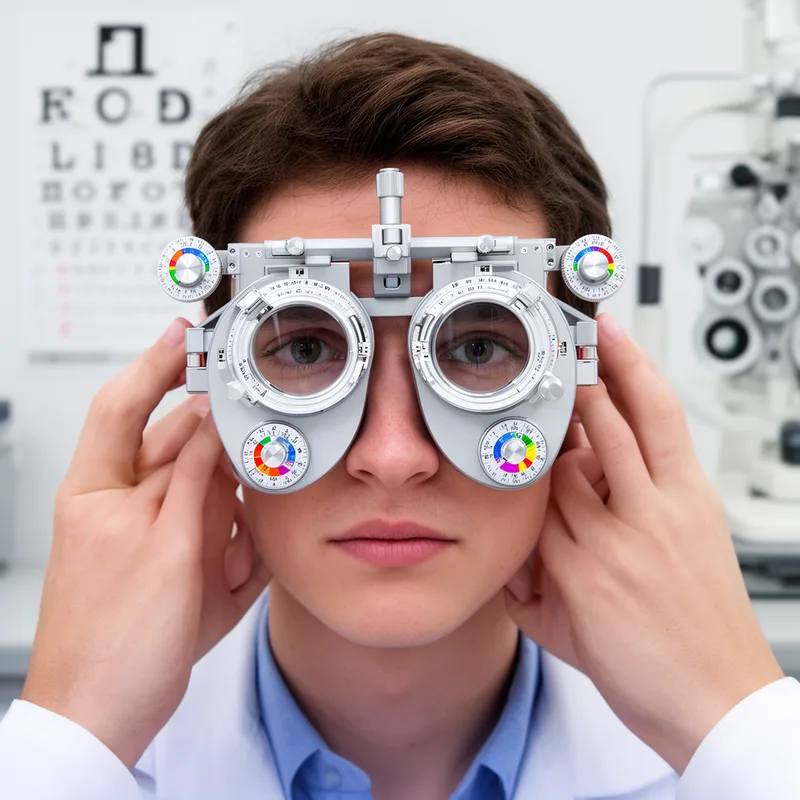
isometropia
- noun
- /ˌaɪsəˈmɛtrəpiə/
- Specialized
- The patient's isometropia meant no prescription difference was required between the two lenses.
Examples
-
Routine vision tests confirmed isometropia, so no corrective action was needed.
-
Uncorrected isometropia usually does not result in any binocular vision problems.
-
The patient was diagnosed with isometropia last week.
-
Is isometropia common among children?
-
Routine vision tests confirmed isometropia, indicating that both eyes had equal refractive power.
-
The patient's isometropia showed that no prescription difference was necessary for his lenses.
-
Uncorrected isometropia typically does not cause issues with binocular vision.
Antonyms
- Specialized
One eye needs stronger glasses than the other so the eyes focus differently
How Equal
- Specialized

- Specialized
Surface Forms
Morphology
isometropia = metropia (opaque) = iso + metropia
Although 'iso-' means 'equal', the root 'metropia' is a specialised medical combining form unfamiliar to average learners, so the overall meaning is not derivable by a typical B1 learner.
Etymology
The word isometropia begins with iso-, meaning 'equal', which you can see in words like isometric. The second part, -metropia, links to 'measure' and 'vision' and is like meter ('measure') and -opia ('vision'). So the whole word means both eyes have the 'same' way of focusing light.

