
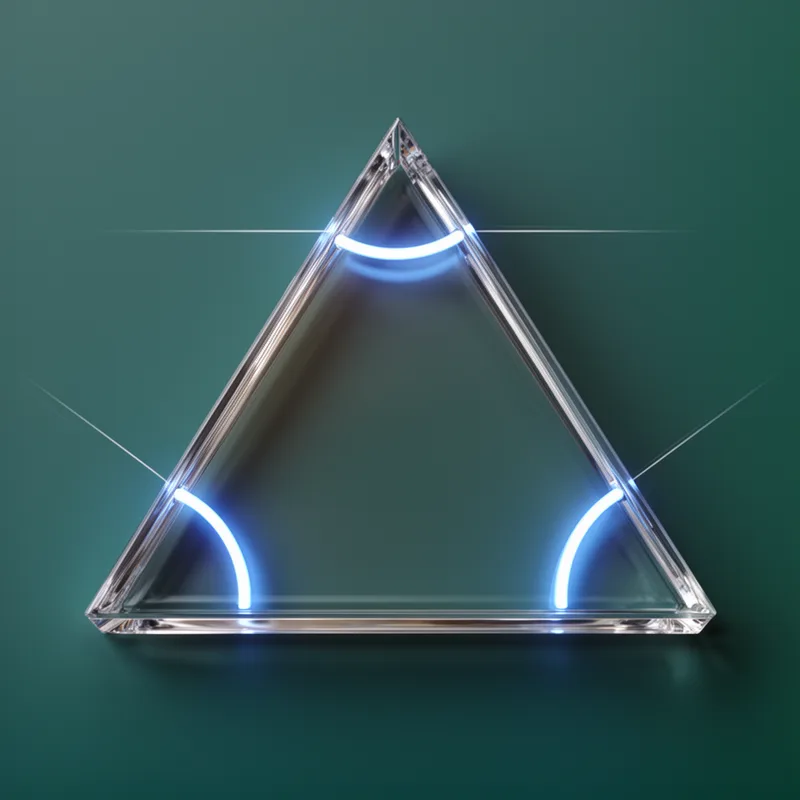
isogonic
- adjective
- /ˌaɪsəˈɡɒnɪk/
- Specialized
- The triangle has isogonic properties, with all interior angles the same.
Examples
-
Many maps show isogonic lines that connect points with the same magnetic declination.
-
In some crystals, the axes are isogonic, resulting in symmetrical shapes.
-
The isogonic lines on the map indicate equal angles.
-
In geometry, isogonic figures are fundamental.
-
In some crystals, the axes are isogonic, resulting in symmetrical shapes.
-
Many maps show isogonic lines that connect points with the same magnetic declination.
-
The triangle has isogonic properties, with all interior angles the same.
Synonyms
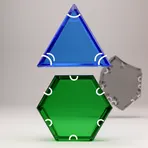
Having all angles equal in a shape like a triangle or hexagon
Compounds
- Specialized
A line on a map connecting places with the same difference between magnetic north and true north
Surface Forms
Morphology
isogonic = isogon (semi-transparent) = iso + gon + ic
Formed by suffixing '-ic' to the technical geometric noun 'isogon' (iso- + gon); the meaning 'having equal angles' is direct but relies on specialized combining forms unfamiliar to many learners.
Etymology
Isogonic comes from Greek parts iso- meaning 'equal' and gonia (seen in -gonic) meaning 'angle', as in hexagon. So, an isogonic shape or line is one that has equal angles.

