
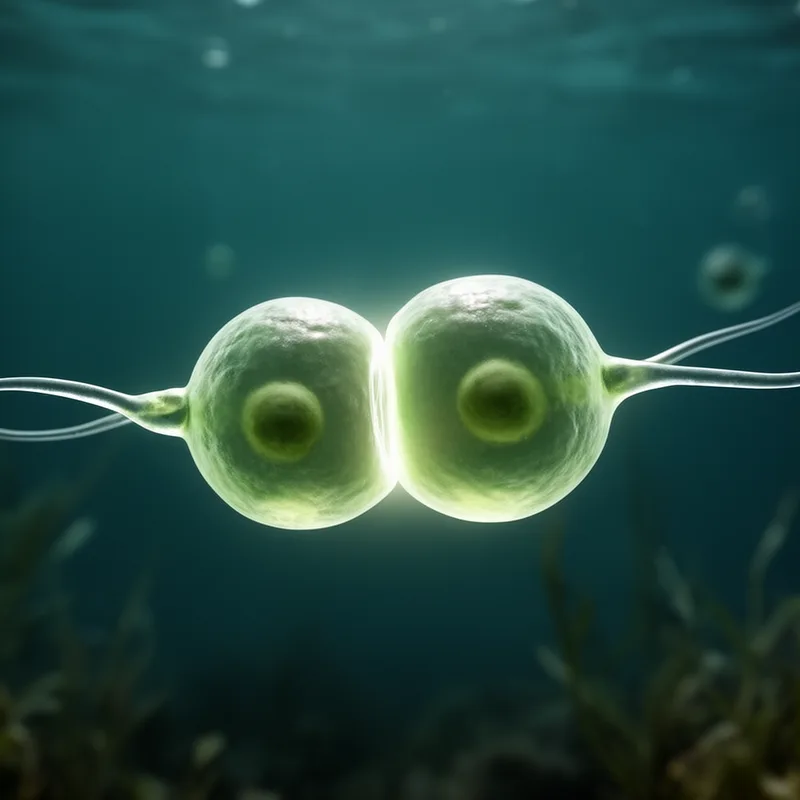
isogamete


 1
9.9
- noun
- /ˌaɪsoʊˈɡæmiːt/
- Specialized
- The fusion of two isogametes results in the formation of a diploid zygote.
Examples
-
Many algae reproduce using isogametes, which are indistinguishable except by mating type.
-
In some species, isogametes are motile, allowing them to seek out one another for fertilization.
-
An isogamete is crucial for fertilization in certain algae.
-
The study focused on the role of isogametes in reproduction.
-
In certain algae, isogametes are similar in size and can fuse during reproduction.
-
The fusion of two isogametes creates a zygote, an essential step in the life cycle of many organisms.
-
Many species rely on isogametes for sexual reproduction, as these gametes are indistinguishable from each other.
Surface Forms
Morphology
Etymology
Isogamete comes from the parts iso- meaning 'equal', as in isotope, and gamete meaning a 'sex cell' or 'joining', like the '-gamy' in monogamy. So an isogamete is an 'equal' sex cell, which is why two isogametes are similar in size and form and can fuse to make a zygote.