

irreversibly
 7
6.4
7
6.4

- adverb
- /ˌɪrəˈvɜrsəblɪ/
 :
irreversiblemente
:
irreversiblemente
- The toxic spill irreversibly damaged the ecosystem, and it will take decades to recover.
- irreversibly damaged
- irreversibly altered
- irreversibly changed
Their bodies have been irreversibly changed.
- Their bodies have been irreversibly changed.
- We are becoming irrevocably, irreversibly very diverse, extremely diverse.
- So, you know, if we're gone, all of that is frustrated potentially irreversibly.
Examples
-
Natural systems are vulnerable to climate change, and more systems will be damaged irreversibly as global warming increases.
Academic text (2002) -
The ecology of freshwater systems may be irreversibly damaged if we humans don't improve the way we treat them.
Academic text (2007) -
Their bodies have been irreversibly changed.
-
Before long... you will all be irreversibly losing your minds.
-
I strongly recommend that you ask this question, since it will irreversibly change the course of your trip.
Fiction book (1996) -
Nature has been severely, and in many cases irreversibly, damaged.
Academic text (1993) -
If the servers are down for even a day, our reputation is irreversibly destroyed.
-
The habitat of a vast number of flying species is being irreversibly damaged.
Academic text (1993) -
Since 1945, 17% of the planet's vegetated surface has been irreversibly degraded.
-
Tetracyclines are irreversibly incorporated into fetal teeth, resulting in discoloration and a tendency to develop dental caries.
Academic text (2011)
Synonyms
 16
7.7
16
7.7
So that something cannot be changed or undone
 9
7.5
9
7.5
In a way you cannot fix or make right
 5
8.1
5
8.1
In a way that cannot be changed back


 1
8.8
1
8.8
In a way that cannot be given back or fixed
 1
8.4
1
8.4
In a way that cannot be fixed
 1
8.0
1
8.0
In a way that cannot be changed
 1
8.2
1
8.2
In a way that cannot be separated or broken

In a way that cannot be fixed or returned to how it was before

In a way that cannot be changed

No one can make it different

In a way that you cannot remove
Antonyms
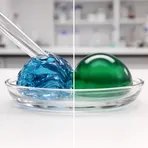
How Reversible

Surface Forms
Morphology
irreversibly = irreversible (transparent) = ir + reverse + ible + ly
Forming the adverb by adding -ly to the adjective 'irreversible' is a regular and transparent derivation.
Etymology
Irreversibly comes from the parts ir- meaning 'not' and reverse meaning 'turn back', with -ly making it describe how something happens. So, irreversibly means 'in a way that cannot be turned back' or 'cannot be undone'.