
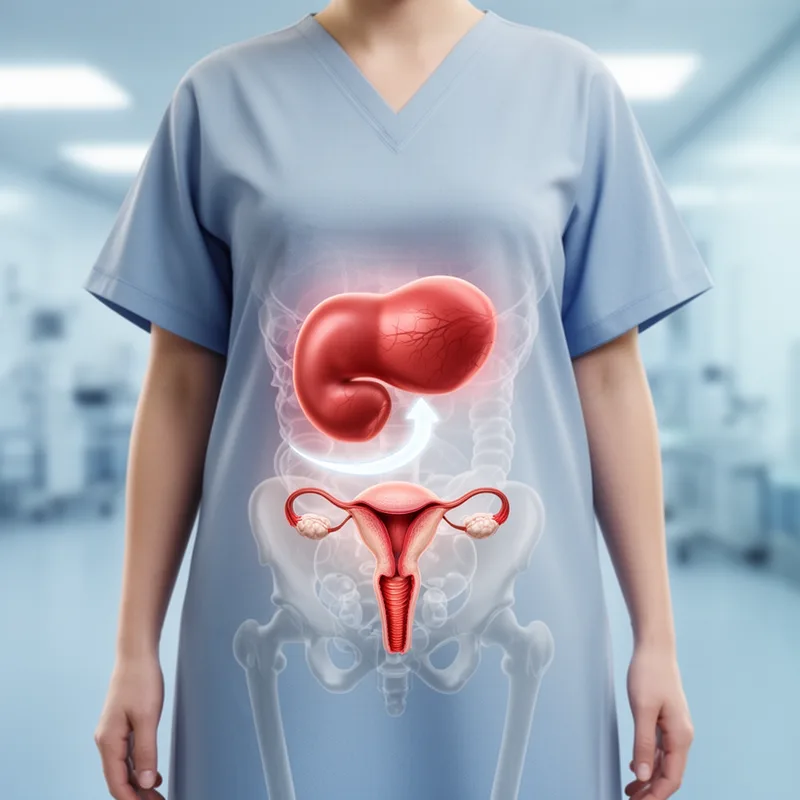
involution
- noun
- /ˌɪnvəˈluːʃən/
- Specialized
- After childbirth, the uterus undergoes involution to return to its original size.
Examples
-
Serial CT scans showed complete involution over the following eight years.
Academic text (2008) -
Trauma may play a role in the development of these lesions, and they do not undergo spontaneous involution.
Academic text (2008) -
The parents declined surgical intervention, so the patient was followed with serial CT scans, which showed total involution of the lesion.
Academic text (2008) -
The doctor explained that involution can take several weeks following delivery before the uterus is fully normal.
-
During her postpartum check-up, the physician noted the involution of the uterus was occurring as expected.
Antonyms



Surface Forms
Morphology
Etymology
Involution comes from the Latin parts in- 'in' and volvere 'to roll', with the idea of 'rolling back' to an earlier state. That's why in medicine involution means an organ returning to its normal size, as the body 'rolls back' after pregnancy.