
intraepithelial
 1
9.9
1
9.9

- adjective
- /ˌɪntrəˈɛpɪˌθiəl/
- Specialized
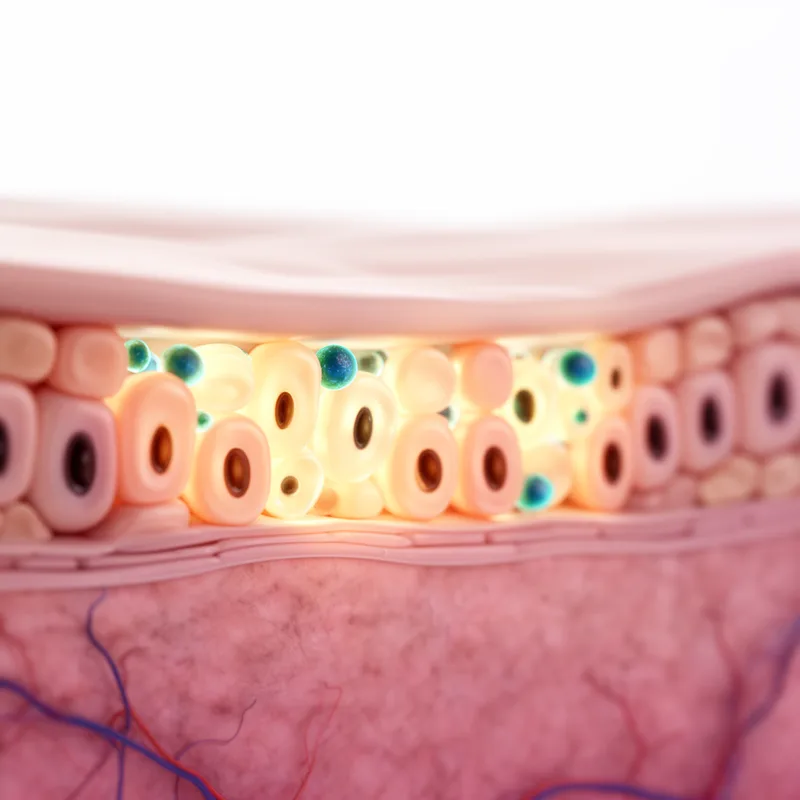
- Cervical intraepithelial neoplasia (CIN) grades 1 to 3 describe how far dyskaryotic cells have progressed into the squamous epithelium (Figure 4).
- intraepithelial neoplasia
- cervical intraepithelial
Examples
-
High-risk (oncogenic) types that cause cervical intraepithelial neoplasia and invasive cancer.
Academic text (2015) -
And it's true that there was one subgroup of one clinical study that showed a 44.6% greater incidence of cervical intraepithelial neoplasia grade (CIN) 2/3 in women.
Blog text (32) -
CIN1, cervical intraepithelial neoplasia, i.e., 'new changes in the outer layer of the cervix.'
Academic text (2011) -
CIN: cervical intraepithelial neoplasia, SCC: squamous cell carcinoma.
Blog text (21) -
Two studies used a histological diagnosis of high-grade squamous intraepithelial lesion (HSIL) as their disease threshold.
Academic text (2016) -
HPV-associated vulvar cancer tends to occur in younger women and might be preceded by vulvar intraepithelial neoplasia (VIN).
Blog text (15) -
Test of cure is performed on all women who have been treated for cervical intraepithelial neoplasia (CIN) who have normal, borderline, or low-grade cytology six months after treatment.
Academic text (2015) -
The small bowel showed increased eosinophils, plasma cells, and lymphocytes in the lamina propria with some blunting of the villous architecture without an increase in intraepithelial lymphocytes.
Academic text (2007) -
The normal constituents of the cell-mediated arm of the immune system are present in the nasal mucosa, and it has been shown in the normal host that the predominant intraepithelial mononuclear cell population in the nasal cavity is the T-lymphocyte.
Academic text (1998) -
The doctor confirmed that the patient had a condition affecting the cervical intraepithelial layers of cells.
How Internal
- Specialized
1
9.9

- Specialized
5
6.5
Surface Forms
Morphology
intraepithelial = epithelial (semi-transparent) = intra + epithelial
The prefix 'intra-' means 'within', but the specialized term 'epithelial' may not be fully transparent to all learners.
Etymology
The word intraepithelial breaks into intra- 'within' and epithelial from epithelium, the thin 'layer of cells' that covers the body or lines organs like a simple 'skin'. So intraepithelial describes something located 'within' that thin cell layer.