
intracardiac
 1
7.8

- adjective
- /ˌɪntrəˈkɑrdɪæk/
- Specialized
- An intracardiac device was implanted to help manage the patient's heart rhythm.
- intracardiac pressure
Examples
-
During the procedure, the surgeon monitored the intracardiac pressure to ensure everything was functioning properly.
-
For example, there has been a documented increase in occurrences of cardiovascular abnormalities, including vascular slings and intracardiac lesions.
Academic text (2008) -
Intracardiac.
-
Let's go intracardiac epinephrine.
-
This would produce a substantial acute increase in left-ventricular transmural pressure and afterload by increasing the difference between intracardiac and intrathoracic pressure.
Academic text (1991) -
In addition, severe abdominal compression can lead to a rapid increase in blood flow to the heart via the IVC, thus leading to chambers' rupture from an abrupt increase of intracardiac pressures 20,21.
Academic text (2016) -
The right ventricle has also been shown to be susceptible to indirect injury by a sudden increase in intracardiac pressure stemming from compression forces to the upper abdomen 54-56.
Academic text (2016) -
This wave causes a sudden increase in intracardiac pressure and pushes on the closed valve, causing extension of the mitral valve supporting apparatus (chordae and papillary muscles).
Academic text (2016) -
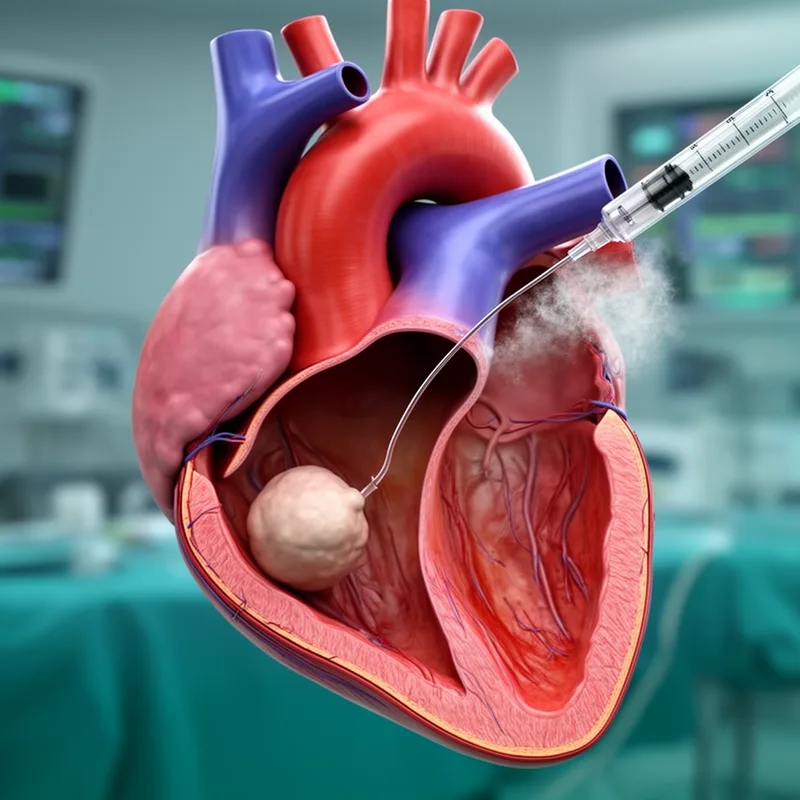
Doctors often use intracardiac techniques to deliver medications directly into the heart.
Surface Forms
Morphology
intracardiac = cardiac (transparent) = intra + cardi + ac
Formed by adding the productive medical prefix 'intra-' ('within') to 'cardiac'; the meaning 'within the heart' is directly inferable.
Etymology
Intracardiac breaks into intra- 'within' and cardi- 'heart', the same root you find in cardio and cardiac. So, intracardiac literally means 'inside the heart', which is why it describes something that happens in the heart or is put into the heart.