
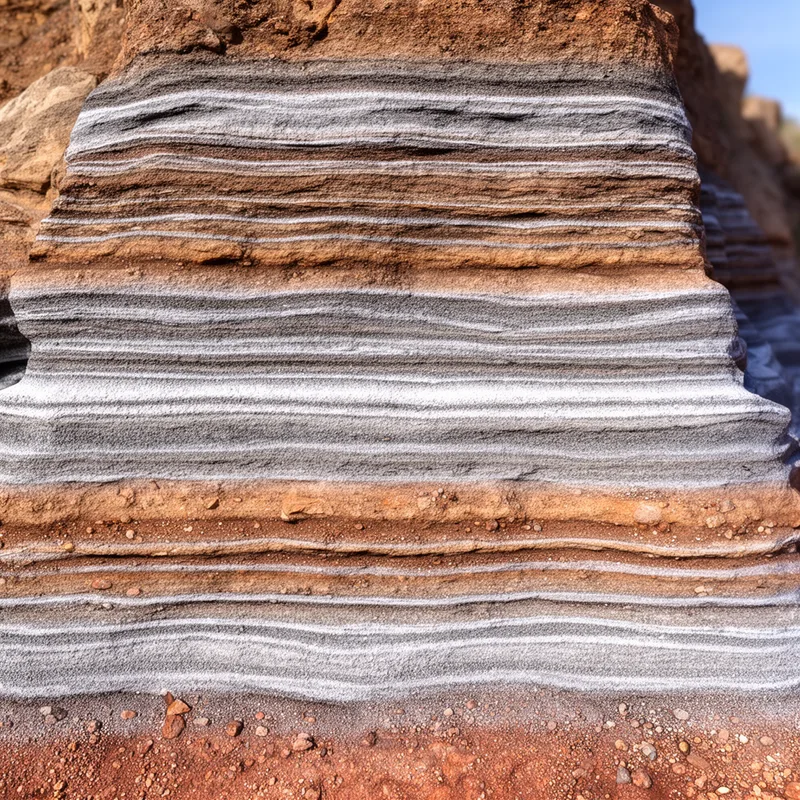
to interstratify
- verb
- /ˌɪntərˈstrætɪfaɪ/
- Specialized
- The geologist explained how different mineral beds interstratify over millions of years.
Examples
-
Geologists often interstratify different rock types.
-
Clay and silt often interstratify during the formation of sedimentary rocks.
-
Several sedimentary deposits in the region are interstratified with layers of volcanic ash.
-
They interstratified the clay and sand layers carefully.
-
The geologist explained how the different rock types were interstratified to form a unique geological structure.
-
In the canyon, layers of limestone and shale are interstratified, revealing their geological history.
-
Researchers discovered that the sedimentary deposits were interstratified with volcanic ash, indicating past eruptions.
Synonyms

 1
6.8
1
6.8

Arrange things into layers, for example in rocks, soil, or data
How Layered
3
4.9

- Specialized
- Specialized
1
6.8
- Specialized
128
5.2
Surface Forms
Morphology
interstratify = stratify (semi-transparent) = inter + strat + ify
Formation is regular prefixation of 'stratify' by 'inter-', but 'stratify' (and the combining form 'strat-') is specialized vocabulary which limits predictability for average learners.
Etymology
Interstratify comes from the parts inter- meaning 'between' and stratify meaning 'to make layers'. So, it means to place layers between other layers—like a cake with different layers—and that's why geologists use it for rocks or sediments that form in alternating layers.