
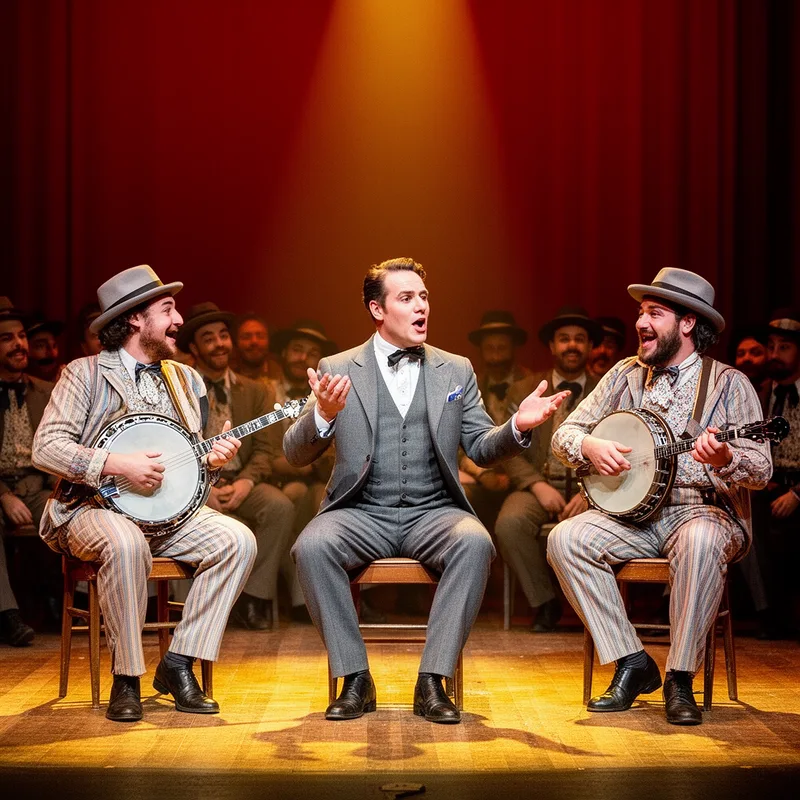
interlocutor
- noun
- /ˌɪntərˈlɒkjʊtər/
- Archaic
- During the performance, the interlocutor kept the audience entertained with humor and storytelling.
Examples
-
Rousseau discovered, of course, that most of his interlocutors posed an obstacle to the achievement of the ideal of transparency: language, as Chamfort, a French wit of his day, is supposed to have said, was given to people so that they might hide what they are thinking.
Academic text (1998) -
But around 10 percent of the interview is dedicated to a bizarre performance from interlocutor Mikal Gilmore, seeming desperate to get Bob Dylan to say that he thinks criticism of Barack Obama is based on racism, say he voted for Obama, or say he really likes Obama.
Blog text (3) -
By the 1850s, another character type was well established in the center of a line of stage minstrels: Mr. Interlocutor, also in blackface but dressed in formal tails.
Academic text (1990) -
On some occasions, especially later in the century, the interlocutor was played in whiteface, thereby changing the racial/social valences in post-Civil War circumstances n20.
Academic text (1990) -
A friend can turn out to be a spy, while a sterile conversation for public consumption can carry erotic, subversive, or satirical overtones that bespeak a second relationship among the interlocutors.
Academic text (1998) -
In the minstrel show, the interlocutor engages the other performers with witty banter.
-
As the interlocutor in the drama, she guided the conversation between the characters perfectly.
Synonyms
A performer in old minstrel shows who stood in the middle and led jokes and talk

A woman who stands in the middle of a performance and leads the spoken parts
Surface Forms
Morphology
interlocutor = locutor (semi-transparent) = inter + locutor
Although morphologically analyzable as 'inter-' + 'locutor', the specific role in minstrel shows is a specialized, culturally specific sense not predictable from the parts alone.
Etymology
Interlocutor comes from the Latin parts inter- 'between' and loqu- 'to speak'. In old minstrel shows the interlocutor was the performer who sat in the middle and led the talk, which fits the name.

