
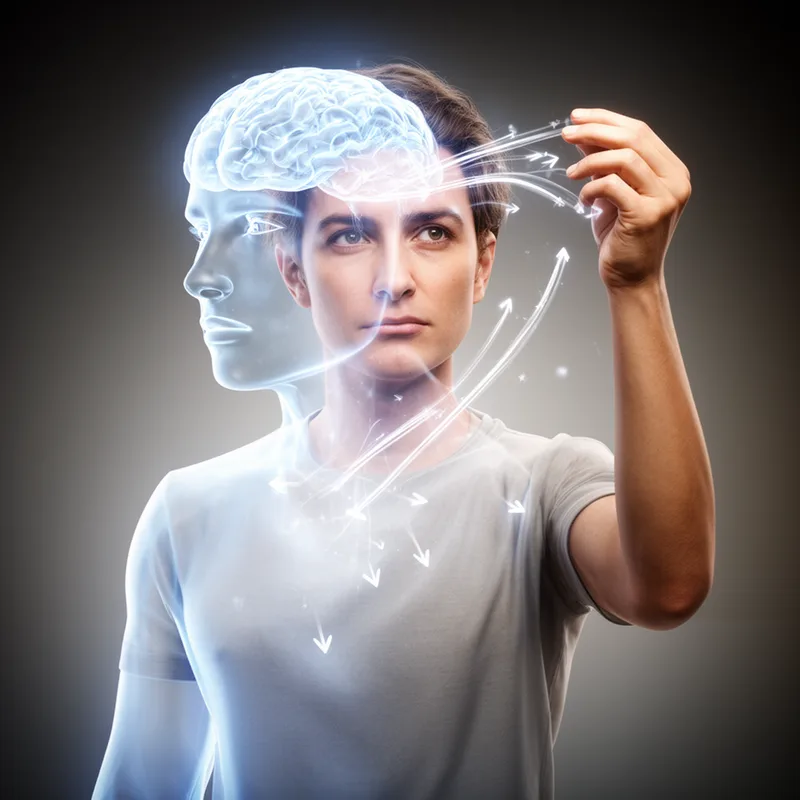
interactionism
- noun
- /ˌɪntərˈækʃənɪzəm/
- Specialized
- In his lecture, the professor introduced interactionism as a theory where mental and physical states can influence one another.
Examples
-
Some scientists criticize interactionism for lacking empirical evidence of mental-physical causation.
-
In his lecture, the professor introduced interactionism as an alternative to strict materialism.
-
Many philosophers debate whether interactionism can truly explain the relationship between mind and body.
-
The concept of interactionism is central to many psychological theories.
-
Many philosophers debate the principles of interactionism.
-
Many philosophers debate whether interactionism can truly explain the relationship between mind and body.
-
Some scientists criticize interactionism for not providing enough empirical evidence of how mental states affect physical actions.
Surface Forms
Morphology
interactionism = interaction (transparent) = interact + ion + ism
Formed by adding the doctrinal suffix '-ism' to the noun 'interaction', yielding a theory or doctrine about interactions.
Etymology
Interactionism comes from the parts inter- meaning 'between', action meaning 'doing', and -ism meaning 'a belief or theory'. So it is a theory about two different things (like mind and body) that act on each other and affect one another.

