

insulin shock therapy
- noun
- /ˈɪnsəˌlɪn ʃɑk ˈθɛrəpi/
- Archaic
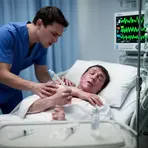
- Many healthcare professionals have criticized insulin shock therapy due to its harsh methods of inducing convulsions for psychiatric treatment.
Examples
-
Before its ban, patients experienced extreme side effects during insulin shock therapy, which aimed to treat severe mental illnesses.
-
Psychiatry has a long, bloody, and inglorious history involving forced medication and confinement, as well as electroshock and insulin shock therapies, and "insane" psycho-surgeries, as well as a thousand other tortures.
Blog text (25) -
The treatment involving insulin shock therapy was controversial because it induced a coma in patients to manage their symptoms.
Synonyms

 8
5.1
8
5.1

A treatment that uses electric shocks to treat severe mental illness
 4
5.8
4
5.8
A medical procedure that uses electric shocks to the brain to help severe mental illness

 1
7.2
1
7.2
A severe effect or treatment using too much insulin that causes uncontrolled shaking and coma

A medical treatment that uses large doses of insulin to cause seizures and coma, formerly used for serious mental illness

A medical treatment from the past that gave injections to cause strong seizures to treat mental illness

A medical treatment that uses a drug to cause seizures and coma

A medical treatment using Metrazol to cause seizures and coma
How Extreme
- Archaic

- Specialized
1
6.5
- Specialized
1
6.2
- Specialized
24
5.8
Surface Forms
Morphology
The compound is compositionally built from 'insulin' (a hormone) and 'therapy' (treatment), and the insertion of 'shock' signals a severe physiological state, so learners can infer it is a medical treatment involving insulin that produces a harmful/altered bodily state. However, the precise historical meaning — deliberate induction of convulsions/coma as a psychiatric procedure — and the specialized medical sense of 'shock' are unlikely to be known to a B1 learner, so the overall meaning is only partially predictable.
Etymology
The term insulin shock therapy comes from doctors giving large doses of insulin to make a patient fall into a sudden 'shock' or 'coma', often with shaking and loss of awareness. So the name refers to that specific medical treatment where insulin was used to force this collapse.