
to insufflate
- verb
- /ˈɪnsəˌfleɪt/
- Literature
- The bishop insufflated upon the candidate’s forehead as part of the rite.
Examples
-
It was customary for the celebrant to insufflate over the bread before the blessing.
-
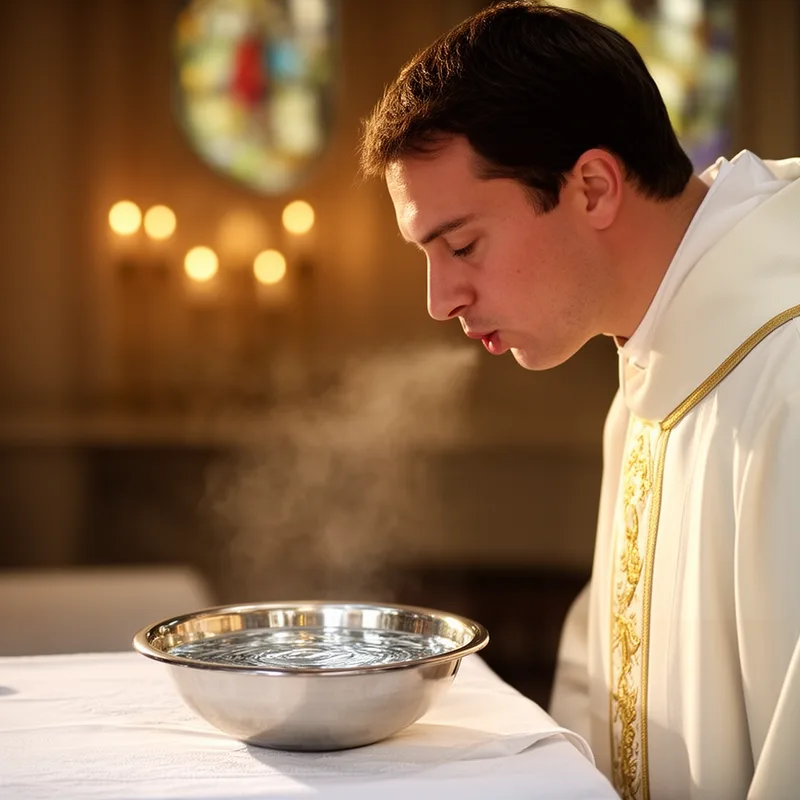
During the ancient ceremony, the priest would insufflate the baptismal water to invoke the Holy Spirit.
-
The priest will insufflate the altar during the ceremony.
-
During the baptism, the minister insufflates the water.
-
During the ancient ceremony, the priest would insufflate the baptismal water to invoke the Holy Spirit.
-
It was customary for the celebrant to insufflate over the bread before the blessing.
-
The priest will insufflate the altar during the ceremony.
How Forceful


Surface Forms
Morphology
insufflate = sufflate (semi-transparent) = in + sufflate
The morphological formation in- + sufflate is regular, but the ritual/sacramental sense is specialized and 'sufflate' is rare, so the meaning is not obvious to general learners.
Etymology
Insufflate comes from Latin parts in- meaning 'into' and sufflare meaning 'to blow'. A helpful way to remember the ritual sense is that priests would 'blow into' water, bread, or on a person to show giving breath or the Holy Spirit, so insufflate can mean to breathe or blow on something in a religious ceremony.