

to inspissate
- verb
- /ɪnˈspɪsˌeɪt/
- Specialized
- To make the paint more durable, the artist chose to inspissate it by letting it dry slowly in a warm room.
Examples
-
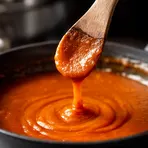
The chef decided to inspissate the sauce by simmering it for longer to achieve a richer flavor.
-
Well-formed acini, some of which contained inspissated secretions, were not unusual.
Academic text (1995) -
On gross inspection, the surface of the mass resembled inspissated secretions.
Academic text (2006) -
The cyst measured 90 x 50 x 33 mm, and it contained thick, yellow, inspissated material (figure 2, A).
Academic text (2010) -
As the sun shone on the syrup, it began to inspissate, becoming thicker and sweeter over time.
Synonyms

 83
4.4
83
4.4

To make a liquid thicker by removing water
 35
2.3
35
2.3
Become or make something less runny
Antonyms

How Thick
55
4.4

- Specialized
8
7.7
11
6.6
- Specialized
35
2.3
Surface Forms
Morphology
inspissate = in + spiss + ate
Although built from recognizable learned morphemes (in- and -ate), the root 'spiss' is not a standalone English word and the formation is a Latinate learned coinage, so an average B1 learner cannot reliably derive the meaning.
Etymology
The word inspissate comes from Latin parts in- ('in') and spissus ('thick'), so it means 'made thick'. To inspissate is to make a liquid become thicker as water leaves, which is why jam or mud can inspissate and set.