

insoluble
 2
6.4
2
6.4

- adjective
- /ɪnˈsɑljəbl/
- Specialized
- Citrate does this by binding to insoluble uranium in the soil.
- insoluble in water
- highly insoluble
- insoluble complex
Loading YouTube…
Watch on YouTubeAnd it just so happens that calcium sulfate is insoluble in dilute sulfuric acid.
- And it just so happens that calcium sulfate is insoluble in dilute sulfuric acid.
- So he didn't know the difference between insoluble fiber and soluble fiber.
- But water and oil are of course insoluble.
- In the early stages they're very concentrated, and as the vegetable grows it, it develops more insoluble fiber.
- These are big labels, soluble and insoluble fiber.
- And I said, Nora is not going to work because the bedtime amyloid PET ligands are binding to insoluble fiber, insoluble one that's plaque.
Examples
-
And so that's what insoluble fiber helps in.
-
And the second problem is that since it's insoluble, we can't use it.
-
Vegetables are rich in insoluble fiber, which, in my opinion, should be very limited.
Blog text (28) -
New study shows role of insoluble dust particles in cloud formation.
Blog text (27) -
You have to be able to consume insoluble fiber to actually feed your gut.
-
The lime neutralizes unwanted organic acids and forms an insoluble complex with phosphates.
Academic text (2003) -
In pure form, ellagic acid is highly insoluble and biologically unavailable.
Academic text (1997) -
Carbon dioxide is also relatively insoluble in water and, together with steam, may be the dominant gaseous component in a hydrothermal system.
Academic text (2002) -
Oxalate binds with calcium in the digestive tract to form an insoluble salt that cannot be absorbed.
Blog text (33) -
Limestone is composed of calcium carbonate, which is insoluble in pure water.
Synonyms
 1
7.7
1
7.7
Not absorbing water so it stays dry
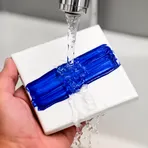
Not able to dissolve in water

Does not dissolve in water, like chalk or some plastics

Not able to dissolve in water
Antonyms

Compounds
How Soluble
- Specialized
10
3.7

- Specialized
2
6.4
Surface Forms
Morphology
Etymology
Insoluble comes from the parts in- ('not') and solvere ('to loosen' or 'dissolve'), the same root behind dissolve and soluble. So an insoluble substance is one water cannot 'loosen' or mix into a liquid.