
innervation


 1
8.4
1
8.4
- noun
- /ˌɪnərˈveɪʃən/
- Specialized
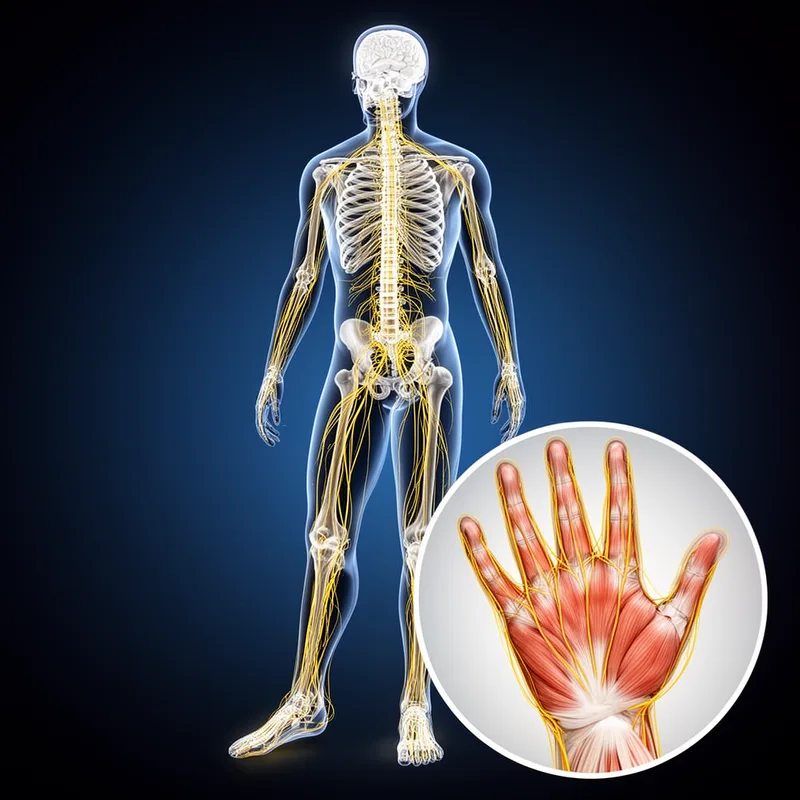
- The sensory cutaneous and muscular nerve innervation to the ankle and foot is derived from the femoral and sciatic nerves and their major branches.
- sensory innervation
- innervation of muscle
- innervation of the nerve
Loading YouTube…
Watch on YouTubeGetting back to prostate health and neural innervation of the penis and and blood flow to the penis.
- Getting back to prostate health and neural innervation of the penis and and blood flow to the penis.
Examples
-
Proper innervation of the heart is crucial for maintaining its rhythm and function.
-
However, a recovery of heart innervation is observed during the chronic phase 4, 20, 21.
Academic text (2016) -
OK, now for the spider monkey, he's got some dense innervation of his tail too.
-
But work in the last decade, especially on the innervation of the intestinal tract, has uncovered some surprises.
-
An acknowledged weakness of excised larynx research is the lack of innervation.
Academic text (2012) -
Nevertheless, recognizing that most muscles have retained the innervation they acquired during the gill-arch stage helps clarify the arrangement in humans.
Academic text (2003) -
One of the first signs to note with compartment syndrome is a nerve deficit involving the innervation of the nerve in the affected compartment.
Academic text (2004) -
The sciatic nerve and its branches provide deeper sensation and muscular innervation of the ankle and foot.
Academic text (2002) -
The sciatic nerve provides essential innervation to the muscles in the leg and foot.
-
Damage to the innervation of a muscle can lead to weakness and loss of movement.
Antonyms

- Specialized
Loss of nerve connection to a part of the body that reduces feeling or movement
How Much
- Specialized
1
8.4

- Specialized
Surface Forms
Morphology
Etymology
The word innervation is built from in- 'into' and the Latin root nervus 'nerve', the same root you see in nerve and nervous. So think of it as 'putting nerves into' a part of the body, like giving a muscle its power lines, which is why innervation means the supply of nerves to an organ or muscle.