

to ingraft


 1
9.9
1
9.9
- verb
- /ɪnˈɡræft/
- Specialized
- In horticulture, experts ingraft branches from one plant onto another to enhance growth.
Examples
-
The gardener ingrafted the rose onto a stronger rootstock.
-
Gardeners often ingraft rosebushes to create hardier plants.
-
The horticulturist explained how to successfully ingraft scions onto mature rootstock.
-
You can ingraft an apple branch onto a pear tree with careful techniques.
-
You can ingraft a branch from one tree onto another.
-
Gardeners often ingraft different varieties of fruit trees to create unique flavors.
-
To improve crop yields, farmers ingraft resilient plant species onto their weaker counterparts.
Synonyms
 6
5.6
6
5.6
To join part of one plant to another so they grow together

To join a part of one plant, like a stem or branch, to another so they grow together
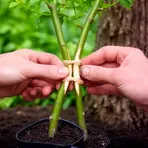
To join living stems or roots of two plants by bending them so they grow together
Antonyms

Surface Forms
Morphology
Etymology
Ingraft comes from in- 'into' and the gardening word graft, which means a young shoot or the act of joining plants. So to ingraft is to put one plant part into another 'into' place so they grow together as one.