

inferior rectus muscle
- noun
- /ɪnˈfɪriər ˈrɛktəs ˈmʌsəl/
- Specialized
- Damage to the inferior rectus muscle can lead to difficulties in moving the eye downward.
Examples
-
The surgeon carefully examined the inferior rectus muscle during the eye procedure to ensure it was functioning properly.
-
Proper functioning of the inferior rectus muscle is essential for maintaining clear vision when looking downward.
-
In the authors' experience, true entrapment of the inferior rectus muscle is rare.
Academic text (2011) -
Diplopia is rarely due to inferior rectus muscle entrapment, and can easily be determined with a forced duction test.
Academic text (2011)
Synonyms
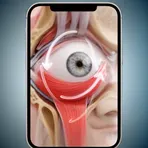
A muscle in the eye that moves the eyeball down and toward the nose
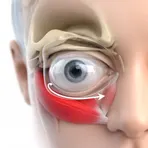
A muscle under the eye that moves the eyeball down and toward the nose
Surface Forms
Morphology
The constituents are largely compositional—'inferior' (lower), 'rectus' (a straight muscle) and 'muscle'—so a learner who knows these words can infer it refers to a lower/straight muscle. However, recognizing that this is specifically an extraocular muscle (in the eye) and understanding its precise function (downward and inward movement) requires anatomical knowledge and is not fully predictable from the parts, making the term only partially transparent.
Etymology
Inferior rectus muscle comes from words meaning inferior 'lower' and rectus 'straight'. The name shows its job: the straight muscle under the eye pulls the eye 'down' and 'in', so it controls looking 'down' and 'in'.

