
to infarct
 1
9.8
1
9.8

- verb
- /ɪnˈfɑrkt/
- Specialized
- After the stroke, the technician confirmed that a section of the brain had infarcted due to the loss of blood flow.
Examples
-
During the surgery, the surgeon noted that parts of the heart began to infarct quickly due to the blocked artery.
-
When a large amount of muscle is infarcted, the sarcolemma loses its functional integrity, creating intracellular edema.
Academic text (2004) -
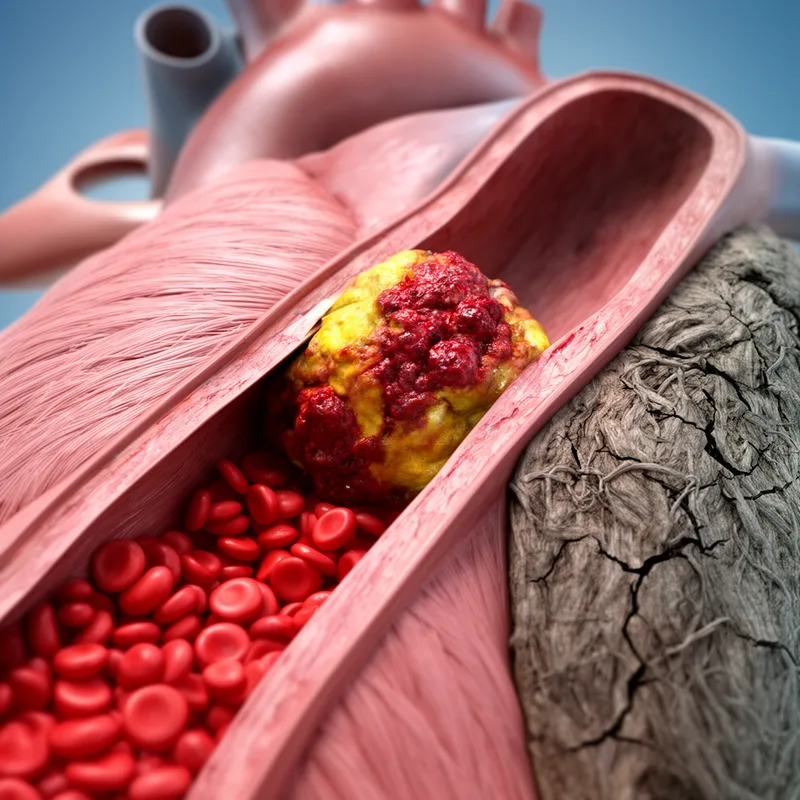
This is what a "heart attack" is: a clot has stopped blood flow to an area of heart muscle, causing it to infarct. (In medicine, infarction refers to tissue death (necrosis) caused by an obstruction of the tissue's blood supply, which leads to a local lack of oxygen.)
Blog text (7) -
The doctor explained that a lack of blood supply can cause the tissue to infarct.
Antonyms


Compounds

- Specialized
Damage to the heart muscle when blood flow stops, often called a heart attack
Surface Forms
Etymology
The verb infarct comes from the same Latin parts in- 'into' and farcere 'to stuff', which gives the idea of something being filled or blocked. So, to infarct tissue is to cause it to die by stopping its blood supply.