
indigenist
- adjective
- /ɪnˈdɪdʒənɪst/
 :
indigenista
:
indigenista
- Once back in Mexico, he became an active proponent of the indigenist movement that flowered after the revolution of 1910-20 and promoted the resurrection of long-suppressed native cultural and artistic practices.
Examples
-
During the 1980s, the focus of Ecuador's indigenous organizations began to shift from an emphasis on syndicalist models of organization and modernizing development to more explicitly indigenist politics.
Academic text (2003) -
In indigenist discourse, the primary demand of indigenous women must be the defense of the community, which these women view as being based on defending collective access to land, the factor that gives cohesion and meaning to indigenous identity.
Academic text (2001) -
The HBNMP curricular guide actually turns this story around, thus offering an indigenist reading of the event:
Academic text (2009) -
Such symbolism, however, ultimately denies the political purchase of an Indigenist interpretation of land:
Academic text (2008) -
In Andean indigenist discourse, this mythical ancestral culture was based on the complementarity of male and female roles.
Academic text (2001) -
Yet it is here in the most displaced place of the novel where Tayo meets Betonie, who has a different perspective on the land of the Gallup arroyo, and where Tayo's nascent political consciousness takes on a particularly Indigenist hue.
Academic text (2008) -
The new policy aimed to promote an indigenist approach to education, celebrating Indigenous cultures and languages.
-
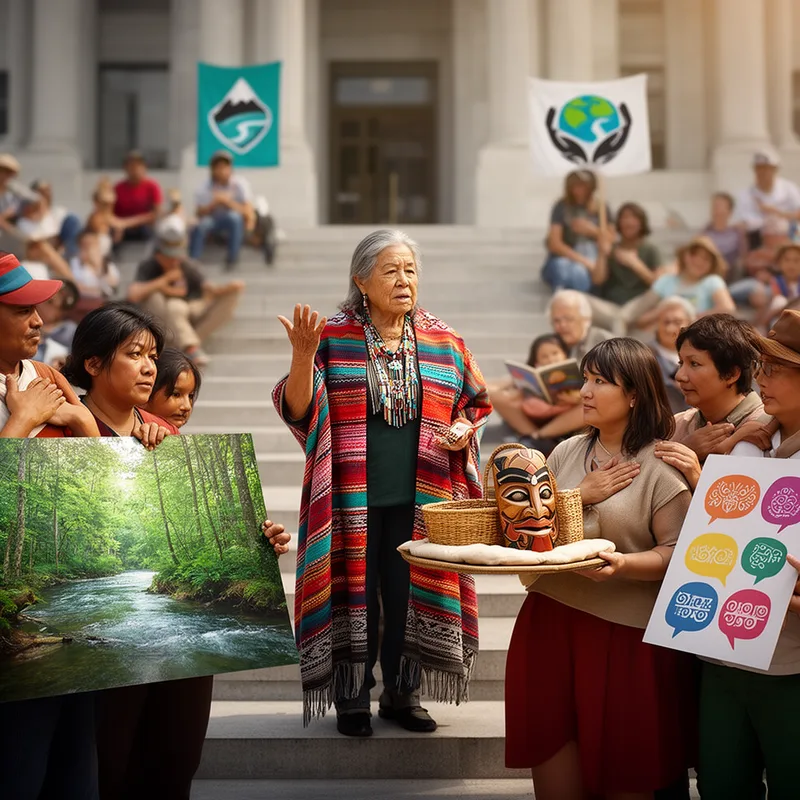
Her speech focused on the indigenist principles that advocate for the rights of Indigenous communities worldwide.
-
The conference highlighted indigenist initiatives that support the preservation of traditional Indigenous practices and beliefs.
How Supportive

 348
2.8
348
2.8
 152
3.4
218
3.6
4
5.0
194
4.6
152
3.4
218
3.6
4
5.0
194
4.6
Surface Forms
Morphology
indigenist = indigenous (transparent) = indigen + ist
The suffix '-ist' clearly indicates a relation to supporting or promoting Indigenous peoples.
Etymology
Indigenist comes from the word indigenous, which means 'native' or 'born in a place', plus the ending -ist (as in activist) that shows 'one who supports' or focuses on something. So an indigenist description or policy is one that supports and promotes the cultures, rights, or voices of Indigenous peoples.