

indentation
 4
3.4
4
3.4

- noun
- /ˌɪn.dɛnˈteɪ.ʃən/
- Microsoft Word has a setting for this: Formats? Paragraph? Indentation? Special? Hanging.
- indentation was 5 mm
- indentation test
Examples
-
The diary itself was a dingy school notebook written from cover to cover without indentations or space between the lines.
Fiction book (1997) -
In formal writing, an indentation helps to visually separate sections of text for better readability.
-
Because you, you, you turn the page and see just how much indentation has taken place.
-
I'm going to give it a little indentation so that we can see this.
-
By the way, I have no idea why the indentation is so messed up!
Blog text (20) -
So this is my level of indentation and I'm continuing right along.
-
See, there's the indentation.
-
For now, Kidder and Liu are puzzling over a mysterious indentation.
Academic text (2011) -
To clearly mark the start of each paragraph, you should use an indentation at the beginning of the line.
-
The editor recommended adding an indentation before each new idea to improve the document's structure.
Synonyms
 1
2.7
1
2.7
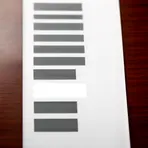
A blank space at the start of a line to show a new paragraph


 1
5.3
1
5.3
A small blank space between the margin and the start of a line where the text begins

The space at the start of a line that is moved in from the margin
Surface Forms
Morphology
Etymology
Indentation comes from the parts in- ('in') and dent ('tooth' or 'dent'), which together gave the idea of a small cut or notch. Think of the first line of a paragraph as 'pushed in' like a little dent, and that is why an indentation marks the start of a new section.