

in situ
 3
7.4
3
7.4

- adjective
- /ɪn ˈsiːtuː/
- Specialized
- The scientists conducted their experiments in situ to obtain more accurate data.
- in situ hybridization
- in situ measurements
- in situ debugging
Loading YouTube…
Watch on YouTubeAnd I have done some wonderful refined work with tools that I found in situ in places.
- And I have done some wonderful refined work with tools that I found in situ in places.
- I mean, we can go to those planets and moons, which is amazing, you know, and we can get samples there and do, you know, measurements in situ.
Examples
-
There is little indication of present-day in situ primary production in dry valley soils.
Academic text (1999) -
Rust Remedial has developed stabilization technologies to treat excavated soil and in situ technologies to stabilize waste without excavation.
Academic text (1995) -
So I always make these measurements in situ and then.
-
And I have done some wonderful refined work with tools that I found in situ in places.
-
So it demonstrates in situ fuel removal.
-
So let's first talk about the in situ identification of microorganisms.
-
Now, however, we can send spacecraft directly to comets and make in situ measurements.
Academic text (1992) -
To improve these retrieval methods requires coupling satellite observations with in situ and ground-based observations.
Academic text (1994) -
The tailward traverse of Comet Giacobini-Zinner gave us our first in situ look at the cometary environment.
Academic text (1992) -
Captive breeding programs only make sense as part of in situ conservation efforts (Kaufman 1987, 1989, Reid 1990).
Academic text (1992)
Synonyms
 240
1.0
240
1.0
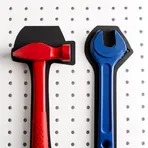
Still in the correct position and not moved
 56
3.4
56
3.4
At the place where the work happens


 1
7.3
1
7.3
It stays in the place where it was first found
How Displaced

Surface Forms
Morphology
in + situ
The preposition 'in' makes the locative sense clear, and 'in situ' is compositionally 'in' + a root meaning position/place; however 'situ' is a non-English (Latin) element not listed in the dictionary entry, so an average B1 learner who only knows basic English vocabulary is unlikely to recognise it. Because the meaning is derivable if the learner recognises the Latin/technical root or has seen the phrase in context, but not fully predictable from everyday English knowledge, it is best classified as semi-transparent.
Etymology
In situ comes from Latin: the words in and situ together mean 'in the original place'. Imagine a fossil left exactly where it was found; because it was not moved we call it in situ, so today the phrase means 'not moved' or 'in its original place'.