

to impress
 8
4.5
8
4.5

- verb
- /ɪmˈprɛs/
- She impressed the shape of her hand into the soft sand to create a lasting memory.
Loading YouTube…
Watch on YouTubeAn inch of white impressed like watermarks on cotton rag paper over the pen strokes of residual grass.
- An inch of white impressed like watermarks on cotton rag paper over the pen strokes of residual grass.
- But what ends up happening is that the demiurge looks to the forms and uses the forms by impressing them upon matter.
Examples
-
When she pulled it away, there was the pattern of the cord impressed on the clay.
Fiction book (1994) -
The foot and any impressed decorations are added to the bottom of the vessel.
Academic text (2007) -
The appearance of the prototype has been impressed onto the memory of the artist.
Academic text (2006) -
After being impressed, the wax obtains a shape similar to that of the ring.
Academic text (2017) -
Smiths sometimes impress motifs on the blades in order to indicate provenance and quality.
Academic text (2006) -
An inch of white impressed like watermarks on cotton rag paper over the pen strokes of residual grass.
-
The artist impressed a beautiful design onto the clay using a distinct pattern.
-
The seal of the king was impressed in wax on the official document.
Synonyms
 397
1.0
397
1.0
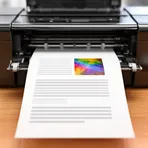
To make text and pictures on paper with a printer
 192
1.0
192
1.0
Make a visible line, spot, or sign on a surface
 40
2.2
40
2.2
To press a design or letters into something with a tool
 13
6.8
13
6.8
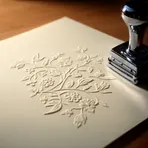
To raise a design on paper or leather by pressing it
 12
3.8
12
3.8
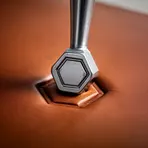
To press something so it leaves a mark
 6
7.7
6
7.7
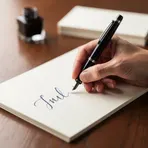
To write words or names on a surface

To cut a pattern into glass, metal, or wood
Antonyms

Idioms

Phrasal Verbs


How Marked

Surface Forms
Morphology
Etymology
Impress originally meant 'press into' and comes from Latin imprimere, made of im- 'into' and press 'push down'. The same root is in press and imprint, so to impress a design is to push a mark into a surface.