

immunogenic
- adjective
- /ˌɪmjunəˈdʒɛnɪk/
- Specialized
- The vaccine was immunogenic; after three doses, 73% of recipients had seroconverted.
- immunogenic vaccine
- immunogenic protein
Examples
-
Given recent findings that M. tuberculosis T-cell epitopes are hyperconserved, we hypothesized that more immunogenic strains have increased capacity to spread within the human host population.
Academic text (2013) -
That's why you get an immunogenic response when you get the, the, the flu vaccine or or in this case the mRNA vaccine, you get pain at the site.
-
In this age group, clinical trials indicate that the vaccine is safe and immunogenic.
Blog text (15) -
A secondary response can occur at some later date following a subsequent immunogenic stimulus.
Academic text (2004) -
Although CTLA-4 antibodies bear good prospects, they are still limited to intrinsically immunogenic tumors.
Academic text (2018) -
Immunizations after transplantation may be variably immunogenic but are still important in providing a measure of protection against vaccine-preventable diseases.
Academic text (2017) -
The critical immunogenic leucocyte load, defined as the concentration of leucocytes necessary to cause sensitisation in a previously non-sensitised individual, is generally accepted as 10^6 per unit.
Academic text (1999) -
Immunisation with MNrgp120 resulted in the appearance of neutralising antibodies in HIV-seronegative volunteers, and the vaccine was immunogenic in HIV-1-infected people.
Academic text (1996) -
Plain polysaccharide antigens are often poorly immunogenic, creating a poor response in infants and young children, but these polysaccharide antigens can be attached to a protein carrier by means of conjugation.
Academic text (2011) -
The study showed that the new vaccine is highly immunogenic, effectively stimulating the production of protective antibodies.
Synonyms
 1
6.8
1
6.8

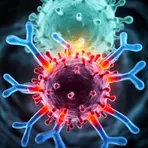
About parts of germs or cells that make the body's immune system react

That helps the body build protection against a disease after a vaccine
Surface Forms
Morphology
Etymology
Immunogenic comes from immune ('protected' or relating to the body's defenses) and the ending -genic ('producing' or 'causing'), the same root you see in generate and genetic. So, immunogenic means 'causing' the immune system to react and make 'antibodies', the body's defence proteins.