
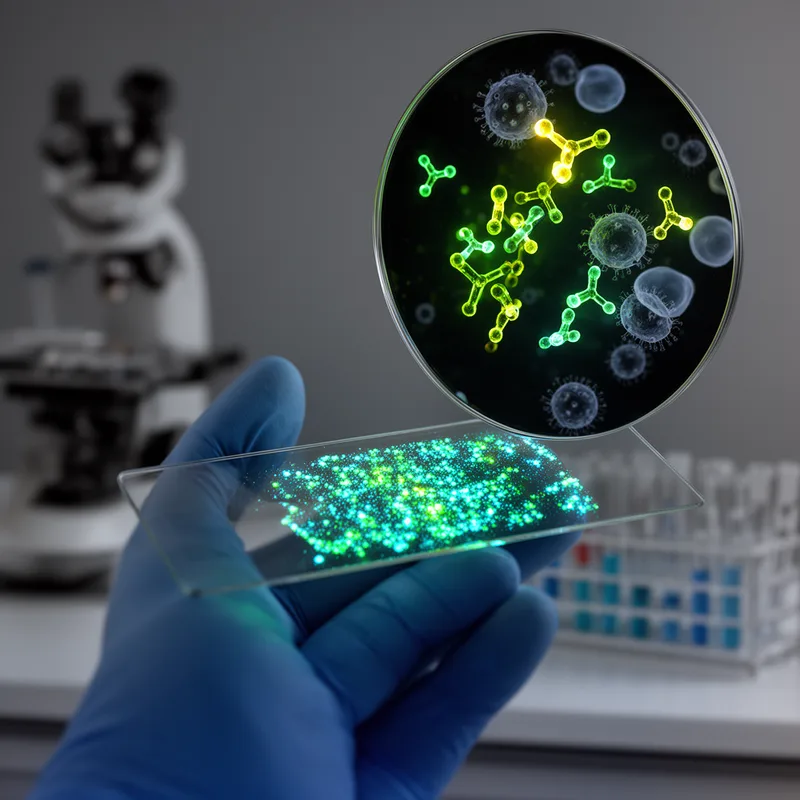
immunofluorescent


 1
8.2
- adjective
- /ˌɪmjunəflʊəˈrɛsənt/
- Specialized
- In the laboratory, immunofluorescent techniques are essential for identifying specific antigens in tissue sections.
Examples
-
Immunofluorescent (IF) staining of tissue was performed as previously described after tissue deparaffinization by clearance in xylene and hydration through a graded ethanol series.
Academic text (2017) -
Immunofluorescent analysis using the antibody specific for chick cells (8F3; c, d) and for quail cells (QCPN; e, f). C' and D' are the higher magnification views of the boxed regions in c and d, respectively.
Academic text (2018) -
The researchers used immunofluorescent staining to visualize the presence of proteins in the cell samples.
-
She explained how immunofluorescent methods can help in diagnosing certain diseases by highlighting infected cells.
How Fluorescent
- Specialized
1
8.2

- Specialized
Surface Forms
Morphology
immunofluorescent = fluorescent (semi-transparent) = immuno + fluorescent
Formed by the combining form 'immuno-' (relating to immune system/antibodies) plus 'fluorescent'; the composition is logical but technical and may not be fully obvious to general learners.
Etymology
The word immunofluorescent combines immuno-, from immune, meaning 'related to the body's defenses', and fluorescent, meaning 'giving off a bright glow' like a fluorescent highlighter. So, an immunofluorescent test uses antibodies that are made to 'glow' so scientists can see and find specific substances in a sample.