
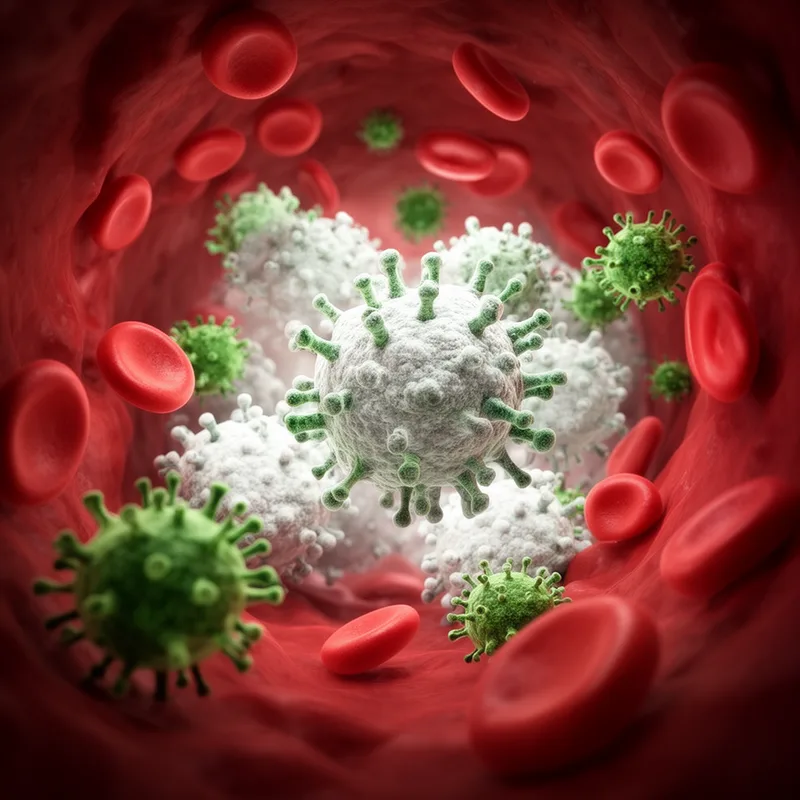
immune system
 122
3.2
122
3.2

- noun
- /ɪˈmjun ˈsɪstəm/
- Specialized
- The doctor explained how vaccines support the immune system by training it to recognize diseases.
- functions of the immune system
- a healthy immune system
- the immune system produces antibodies
Loading YouTube…
Watch on YouTubeBut what if your immune system is not too strong?
- But what if your immune system is not too strong?
- Zinc boosts your immune system by helping strengthen your gut.
- So the human immune system is kind of a remarkable thing.
- Do all the things that can keep your immune system top notch.
- And they really control the immune system in a two way process.
- They stimulate the immune system and fight the good fight for you.
- So there is some brain immune system connection that we don't fully understand.
- There is this connection as well between the immune system and mental health.
- So the immune system is very complex.
Examples
-
In healthy people, the immune system is ever poised to ward off attackers.
Academic text (2011) -
People with weakened immune systems are particularly at risk for the presence of cryptosporidium.
Academic text (1998) -
But what if your immune system is not too strong?
-
So the immune system is very complex.
-
If I get sick, my immune system will have trouble fighting it.
Fiction book (2000) -
We talk about the immune system as our "front line of defense."
Academic text (1998) -
So the human immune system is kind of a remarkable thing.
-
Immediately your immune system goes on alert.
-
As you age, your immune system and T cell function declines.
-
Do all the things that can keep your immune system top notch.
How Active
- Specialized

- Specialized
- Specialized
122
3.2
- Specialized

 1
7.4
1
7.4
Surface Forms
Morphology
The meaning is directly compositional: 'immune' (protected against infection) plus 'system' (an ensemble of cooperating parts) yields the system in the body that provides immunity. This is a literal, cross-linguistically common construction (e.g. Spanish 'sistema inmunológico'), so a learner who knows both constituents can readily infer the MWE meaning.
Etymology
Immune system is a name that gives a simple picture: immune suggests being 'safe from harm' and system means parts that work together. So it refers to the organs and cells in your body that work together to 'protect' you from germs and disease.