
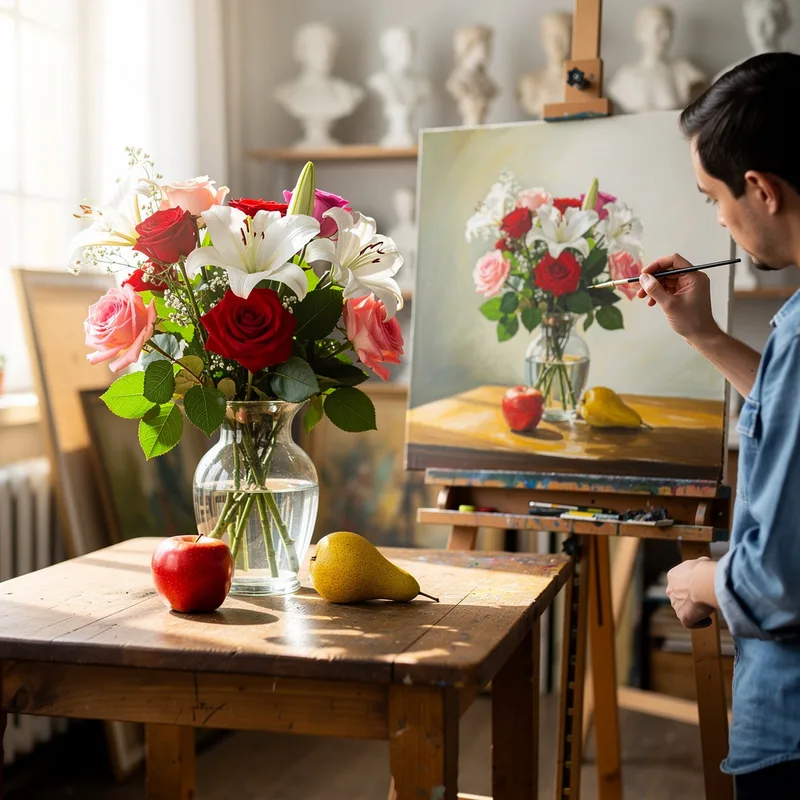
imitation
 4
4.9
4
4.9

- noun
- /ˌɪməˈteɪʃən/
- Formal
- In classical art, a portrait is often seen as an imitation of the subject's true likeness.
- imitation of nature
- imitation of life
- artistic imitation
Loading YouTube…
Watch on YouTubeSo why do you think imitation is so far from understanding?
- So why do you think imitation is so far from understanding?
- Plato says that we enjoy imitation.
- You know from Hegel you understand imitation is one form of being influenced.
Examples
-
Every figure was decorated with red, white, and black dots in imitation of the spotted pattern of the python.
Academic text (1993) -
As in his oration of 1772 in Madrid, Silva chose to speak on the imitation of nature.
Academic text (1998) -
Here is an example of how created form is an imitation of the real.
-
But they but both agree that poetry is an imitation of nature.
-
One striking feature is the realistic imitation of various hairstyles.
Academic text (1995) -
In the earlier text, Silva argues that the artist creates even monsters through the imitation of nature.
Academic text (1998) -
Both realism and photo-realistic representation are imitations of nature.
Academic text (2017) -
In keeping with his avowed "materialism," Ponge adheres to this principle of the meticulous imitation of things observed.
Academic text (1993) -
The artist's imitation of nature is so precise that it almost feels like a photograph.
-
Many believe that great art should be an imitation of the beauty found in the natural world.
Synonyms
 1
9.9
1
9.9
Making art that copies real life or someone's words
A style in art, writing, or drama that tries to show real life
Imitating another artist's style instead of creating original work
Antonyms

Compounds

Surface Forms
Morphology
Etymology
Imitation comes from the Latin imitari, meaning 'to copy'. In art this meant making a work like nature, so imitation in art is the idea of closely copying real life or human behaviour.