
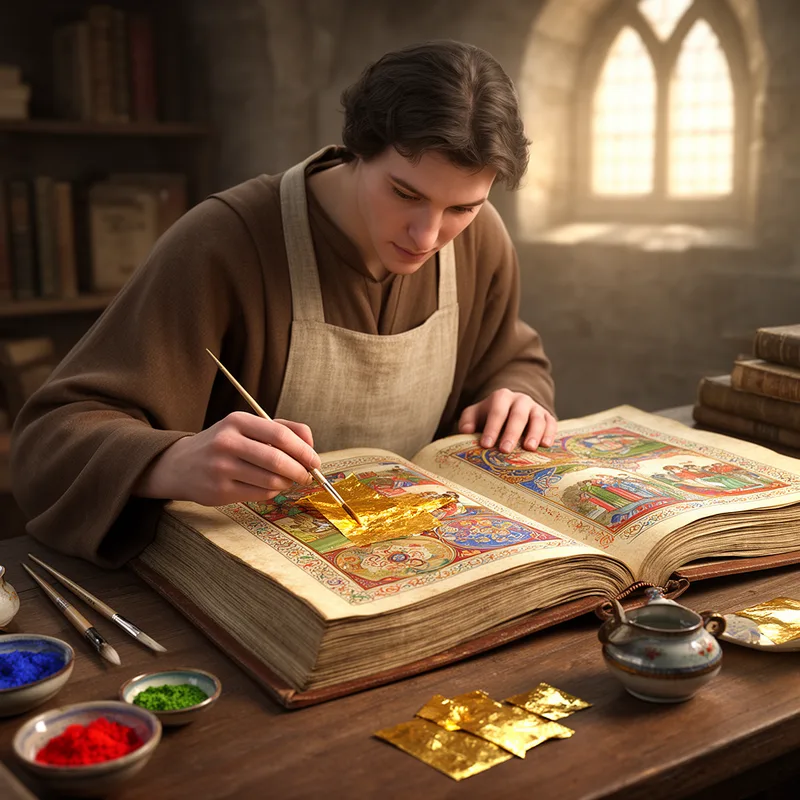
illuminator
- noun
- /ɪˈluːmɪneɪtər/
- Specialized
- Twelfth-century illuminators naturally had recourse to illustration models and frequently dipped into the deep well of traditional iconography.
Examples
-
Some illuminators responded ambitiously to the task, such as those that decorated the Cartulary of Mont-St-Michel with full-page illuminations.
Academic text (1999) -
Brother Adelmo was one of our finest illuminators.
-
Moreover, illuminators' patterns of inspiration are not always easily discerned.
Academic text (1999) -
Their depiction as bishops, in fact, allows the illuminator to draw a greater visual parallel to the abbots, each of whom holds a crosier and a book.
Academic text (1999) -
On the most basic level, the Magliabechiano Vita is important as a concrete and prestigious commission of an autograph work from one of the most skilled, innovative, and sought-after illuminators working in Florence.
Academic text (2008) -
In the Middle Ages, an illuminator would painstakingly decorate each manuscript with intricate designs and gold leaf.
-
Many manuscripts from the 14th century showcase the exceptional talent of the illuminators who brought them to life with vivid illustrations.
-
The work of an illuminator played a crucial role in making religious texts visually stunning and more appealing to readers.
Synonyms

 39
3.2
39
3.2

A person who draws pictures for books or magazines
A person who adds pictures and gold to handwritten books

A person or thing that adds small details to make something look nicer
How Skilled
- Specialized
 8
4.1
8
4.1
Surface Forms
Morphology
illuminator = illuminate (semi-transparent) = illuminate + or
Derived from 'illuminate' but the historical/artistic sense (manuscript decorator) is a specialized extension and not fully obvious to all learners.
Etymology
Illuminator comes from the Latin illuminare, from lumen 'light'. In the Middle Ages an illuminator was an artist who 'lit up' pages with bright paint and gold leaf, so the word now also names the skilled person who decorates books.