
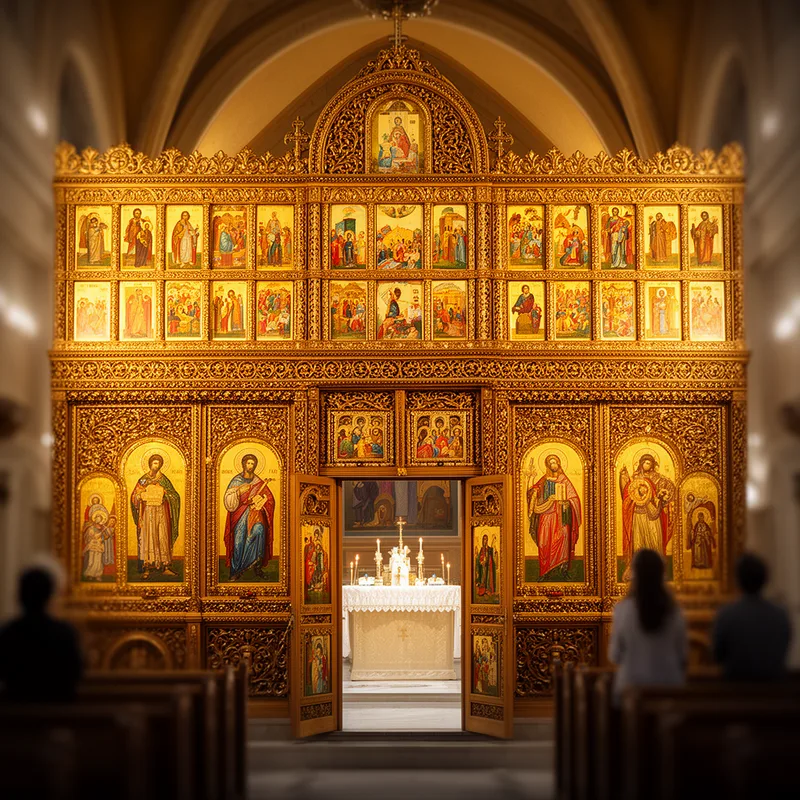
iconostasis


 1
9.9
- noun
- /ˌaɪkəˈnɒstəsɪs/
- Specialized
- During the service, the priest stood behind the iconostasis while performing the rituals.
Examples
-
Others, those from the higher rows of the iconostasis, were lost in the gloom, swollen with moisture and difficult to make out.
Fiction book (2000) -
The bright surge rolled through the nave, full of the odor of decay, hurriedly swept past the walls covered with peeling polychromy, and broke right on the iconostasis.
Fiction book (2000) -
Remember about the iconostasis and the the consecration of the bread and the wine actually happens behind the wall of the the icon.
-
Like the prophet Elijah on the left side of the iconostasis.
Fiction book (2000) -
I thought to myself that the man had photographed, doubtless by accident, the space where the iconostasis used to be.
Fiction book (2000) -
The beautiful iconostasis at the church displayed numerous intricate icons.
-
Visitors admired the craftsmanship of the iconostasis, which separated the altar from the nave.
Surface Forms
Morphology
Etymology
Iconostasis comes from the Greek parts eikon 'image' and stasis 'standing' or 'a standing place'. The same icon appears in English icon, meaning 'picture' or 'important image', and stasis is like 'stand' or 'station', so you can remember iconostasis as the 'place where images stand'. That's why an iconostasis is the decorated screen of icons that stands before the altar.