
hysteresis
 1
9.9
1
9.9

- noun
- /ˌhɪstəˈriːsɪs/
- Specialized
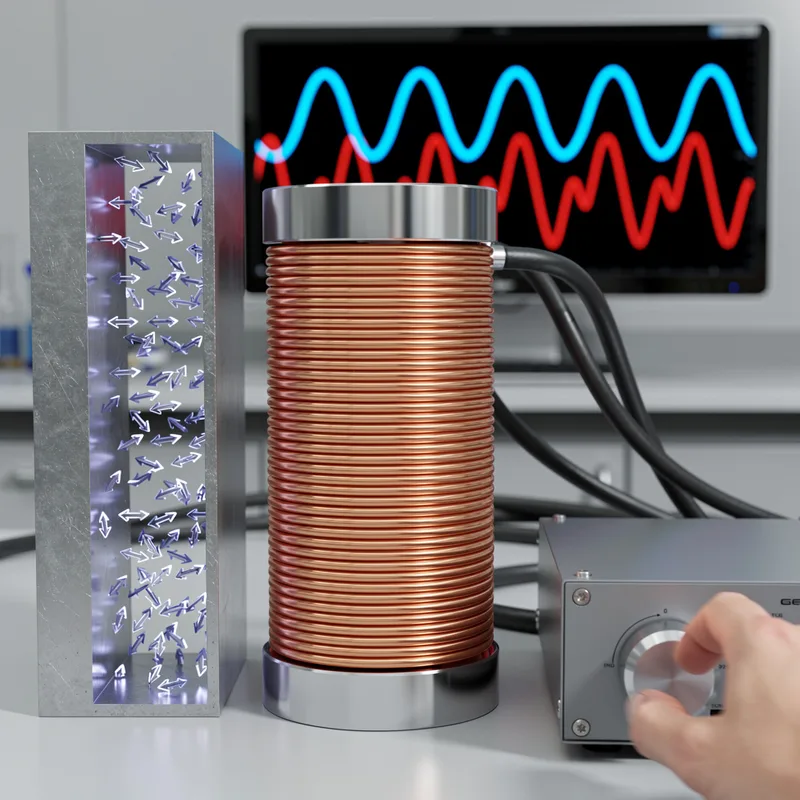
- Also seen in figure 3 is the hysteresis loop associated with the magnetization of the upper layer.
- hysteresis loop
- hysteresis curve
- hysteresis effect
Loading YouTube…
Watch on YouTubeThermals, acoustics, hysteresis, whatever, doesn't matter.
- Thermals, acoustics, hysteresis, whatever, doesn't matter.
- So fan hysteresis is one of the number one things that can be screwed up in AV BIOS profile for a card and that will follow the temperature targets.
Examples
-
When the magnetic field is altered, the material exhibits hysteresis, indicating that its magnetic properties do not immediately follow the changes.
-
It's connected with things like hysteresis, memory and systems.
-
So I mean in a sense this gets back to this question of hysteresis and the fact that these are long lived investments.
-
OK, So then I'm sort of left with this kind of hysteresis kind of behavior.
-
The more square hysteresis properties can be obtained in conjunction with very low noise.
Academic text (1996) -
The circulation of PFAs is subject to hysteresis and drift as the velocity vector changes continuously.
Academic text (1995) -
Bulk soft tissue is expected to demonstrate hysteresis upon loading/unloading and exhibit stress relaxation and creep.
Academic text (1996) -
The force deflection apparatus is capable of estimating hysteresis in prosthetic feet, and we have used it for that purpose.
Academic text (1991) -
The Greenland ice cap displays hysteresis in its response to control variables such as CO₂-induced warming.
Academic text (2005) -
In the experiment, the hysteresis observed in the material's response to magnetic forces was critical for understanding its behavior.
Synonyms
 4
4.4
4
4.4
A delay between an event and its effect
How Delayed

Surface Forms
Morphology
hysteresis = hyster + esis
The word is a direct scholarly borrowing built from Greek combining form 'hyster-' and the noun-forming suffix '-esis', which are not productive or recognizable to average learners, so the meaning 'lagging behind' cannot be derived from familiar English components.
Etymology
Hysteresis comes from the Greek husteros, meaning 'later' or 'after', so a helpful image is of something that is a little late. That's why hysteresis describes when an effect 'lags behind' its cause, for example a magnet that changes more slowly than the magnetic field.