

hypovolemia
 1
9.9
1
9.9

- noun
- /ˌhaɪpəʊvəˈliːmiə/
- Specialized
- Signs of hypovolemia include a rapid heartbeat and low blood pressure.
- hypovolemia and hypotension
Examples
-
Vital signs need to be monitored frequently to watch for signs of hypovolemia (e.g., BP, pulse).
Academic text (2005) -
In patients who are critically ill and on a mechanical ventilator, dynamic measures such as stroke volume variation and pulse pressure variation can be used to identify hypovolemia and fluid responsiveness.
Academic text (2016) -
This leads to further hypovolemia and hypotension.
Academic text (2007) -
The result may be hypovolemia with hypotension or shock.
Academic text (2004) -
Decreased cardiac output is a risk secondary to hypovolemia.
Academic text (2005) -
Such patients will experience signs and symptoms of hemothorax, hypovolemia, shock, and hypoxia.
Academic text (2016) -
Hypovolemia and hypotension, which lead to decreased tissue perfusion, can also contribute to metabolic acidosis.
Academic text (2007) -
Tachycardia may also be unhelpful as a sign of dosing adequacy, since increased heart rate is associated with the blood loss and hypovolemia that often accompanies emergency surgery.
Academic text (2003) -
Although both hypovolemia and heart failure can lead to renal hypoperfusion and enhanced renal sympathetic activity, the circulation can readily distinguish between these two pathophysiological states.
Academic text (2016) -
Hypovolemia can result in dizziness and fainting if not treated promptly.
Synonyms
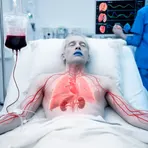
Not enough blood in the body to keep organs working
Antonyms
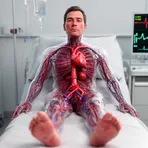
How Severe
- Specialized
1
7.5

- Specialized
1
9.9
Surface Forms
Morphology
hypovolemia = volemia (opaque) = hypo + volem + ia
Although hypo- means 'low,' the base volemia is a specialized medical term, so an average B1 learner would not be able to infer the meaning from the parts.
Etymology
Hypovolemia starts with hypo- meaning 'under' and includes volume meaning 'amount', as in the common word 'volume'. So hypovolemia literally means 'low blood volume', which is why it names the condition when the body has too little blood moving around.