
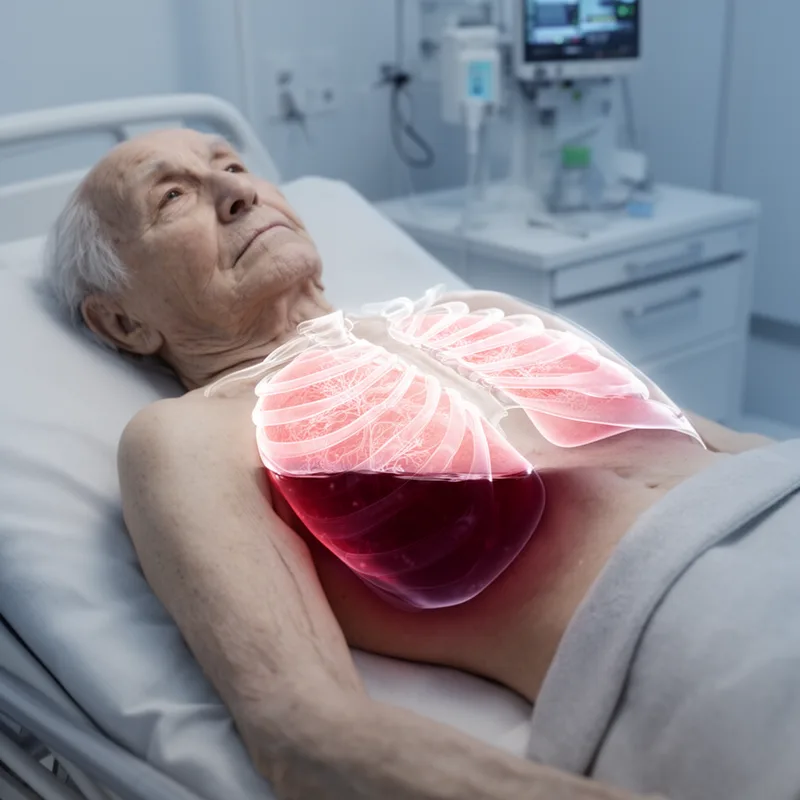
hypostatic
- adjective
- /ˌhaɪpəˈstætɪk/
- Specialized
- The patient developed hypostatic pneumonia after being bedridden for several weeks.
Examples
-
Prolonged immobility can lead to hypostatic congestion in the lungs or other organs.
-
Doctors monitor for hypostatic changes in patients who are unable to move regularly.
-
The patient exhibited hypostatic changes in blood circulation.
-
Hypostatic conditions can lead to serious health issues.
-
The patient developed hypostatic pneumonia after being bedridden for several weeks.
-
Doctors monitor for hypostatic changes in patients who are unable to move regularly.
-
Prolonged immobility can lead to hypostatic congestion in the lungs or other organs.
Compounds

Surface Forms
Morphology
hypostatic = hypostasis (opaque) = hypostasis + ic
The word is formally built from 'hypostasis' + '-ic', but the medical sense is specialized and not readily inferable for an average B1 learner.
Etymology
Hypostatic comes from the Greek parts hypo- 'under' and stasis 'standing' or 'staying'. In medicine, think of blood or fluid 'standing' in the lower parts of the body, so hypostatic pneumonia or congestion happens when fluid settles in the lower lungs.

