

hypocenter


 1
8.4
1
8.4
- noun
- /ˈhaɪpoʊˌsɛntər/
- Specialized
- After the earthquake, the rescue teams focused on the area directly above the hypocenter to find survivors.
Examples
-
In fact, every human being—with the exception of two—within a 1.2 kilometer radius of the hypocenter was atomized or fried within a few seconds of the 8:15 a.m. bombing.
Academic text (2010) -
The scientists marked the hypocenter of the nuclear explosion on the map to study the damage.
-
On the other side of the city, the ground rises to the ridge above the hypocenter.
-
Then, were dropped on the ridge above the hypocenter, as close in time to the detonation as possible.
-
A splinter unit will take this tunnel from the city to the floor of the hypocenter.
-
The flesh of the children in Honkawa Elementary School near the hypocenter did not hold up as well as the concrete and structural steel of the Atomic Bomb Dome.
Academic text (2010) -
The research indicated that buildings closest to the hypocenter suffered the most severe structural damage.
Synonyms
 44
6.5
44
6.5
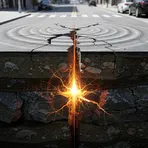
The point on the ground directly above where an earthquake starts
 2
6.3
2
6.3
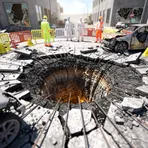
The exact place on the ground most damaged by a bomb or explosion
Surface Forms
Morphology
Etymology
Hypocenter comes from the Greek parts hypo- 'under' and center 'middle'. So it names the point on the ground right beneath the center of an explosion, which helps you remember why people look there after a blast.