

hypobaric
- adjective
- /ˌhaɪpoʊˈbærɪk/
- Specialized
- Pilots often undergo hypobaric simulations to experience conditions found at high altitudes.
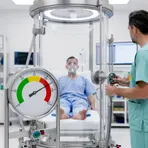
- hypobaric chamber
- hypobaric hypoxia
Examples
-
Despite the studies showing HRV alterations in response to hypobaric hypoxia, less is known about the effect of chronic sustained normobaric hypoxia on HRV.
Academic text (2018) -
Pulmonary arterial pressure increases with hypoxia, but only hypobaric hypoxia increases lung fluid and protein flow, producing edema.
Academic text (2018) -
Chronic hypobaric hypoxia: The expedition will encounter altitudes of around 3,200 meters.
Blog text (7) -
Increasing red blood cell counts by re-injecting one's own blood was morally reprehensible ('blood doping'), while sleeping in a hypobaric chamber (as many athletes do) was somehow less so.
Blog text (3) -
At our altitude, 3,233 meters (10,607 feet), there is less oxygen in the atmosphere, and that is worsened still by our increased distance from the Equator and the extremely cold temperatures, which further decrease hypobaric pressure.
Blog text (15) -
The astronauts trained in a hypobaric chamber to prepare for the low pressure of outer space.
-
The research team studied the effects of hypobaric conditions on human physiology during their experiments.
Antonyms

How Pressurized
- Specialized
 6
7.5
6
7.5

- Specialized
Surface Forms
Morphology
hypobaric = baric (semi-transparent) = hypo + bar + ic
The prefix hypo- clearly contributes the sense of 'below normal', but the base baric is a technical form, so the full meaning is only partly predictable for typical learners.
Etymology
Hypobaric comes from the Greek parts hypo- 'under' and baric 'pressure', the same root you meet in barometer, which measures air pressure. So hypobaric describes a place or condition with 'lower than normal' air pressure.