
hypersurface
- noun
- /ˈhaɪpərˌsɜːrfɪs/
- Specialized
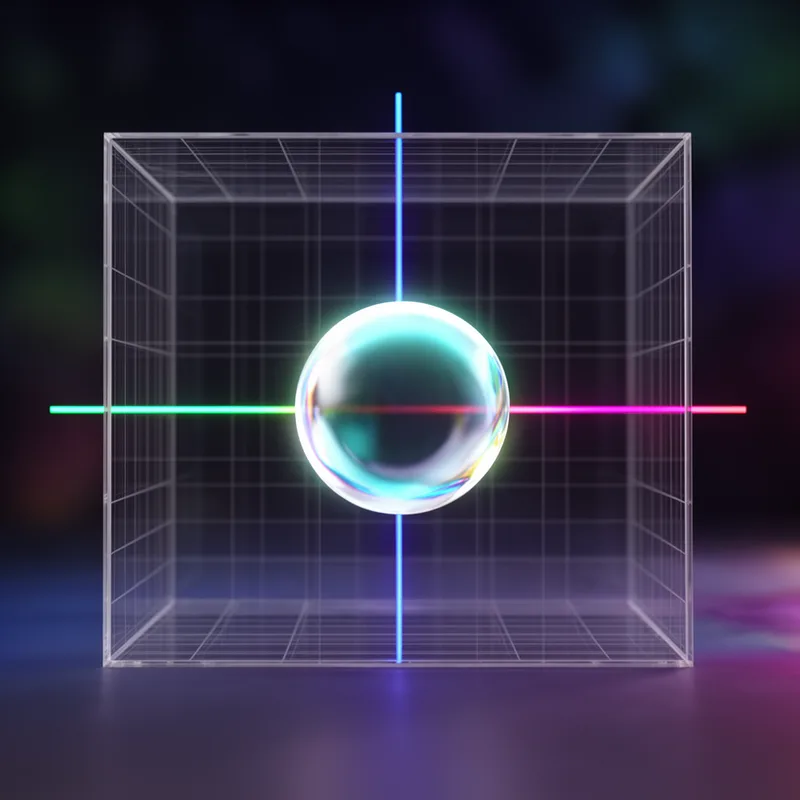
- In mathematics, a hypersurface is defined as a surface whose dimension is one less than that of the surrounding space.
- hypersurface deformations
Examples
-
Oh, so this is at some hypersurface R which is close to the horizon.
-
One entry point for testing quantum gravity, therefore, is the form of hypersurface deformations.
Academic text (2012) -
We are brought back to hypersurface deformations, which tell us how to change time and how spacetime evolves.
Academic text (2012) -
But loop quantum gravity gives specific prescriptions for promoting the hypersurface deformations S and T to operators acting on wave functions.
Academic text (2012) -
What remains open is the question of whether the quantum theory is consistent and covariant—that is, whether it leads to a quantum version of hypersurface deformations that remains indifferent to specific coordinate choice.
Academic text (2012) -
In 1958, Paul Dirac, who derived equation 1, showed that a theory invariant under all hypersurface deformations is generally covariant—that is, the physics of the theory is insensitive to coordinate choice.
Academic text (2012) -
The researchers studied the characteristics of a hypersurface to understand the properties of the manifold.
-
A hypersurface can represent various geometric shapes in higher-dimensional spaces.
Surface Forms
Morphology
Etymology
Hypersurface comes from hyper- meaning 'over' or 'beyond', the same hyper- in hyperactive, and surface meaning 'outer side'. So a hypersurface is a surface that sits in a space with more dimensions and is one less dimension than that space.

