
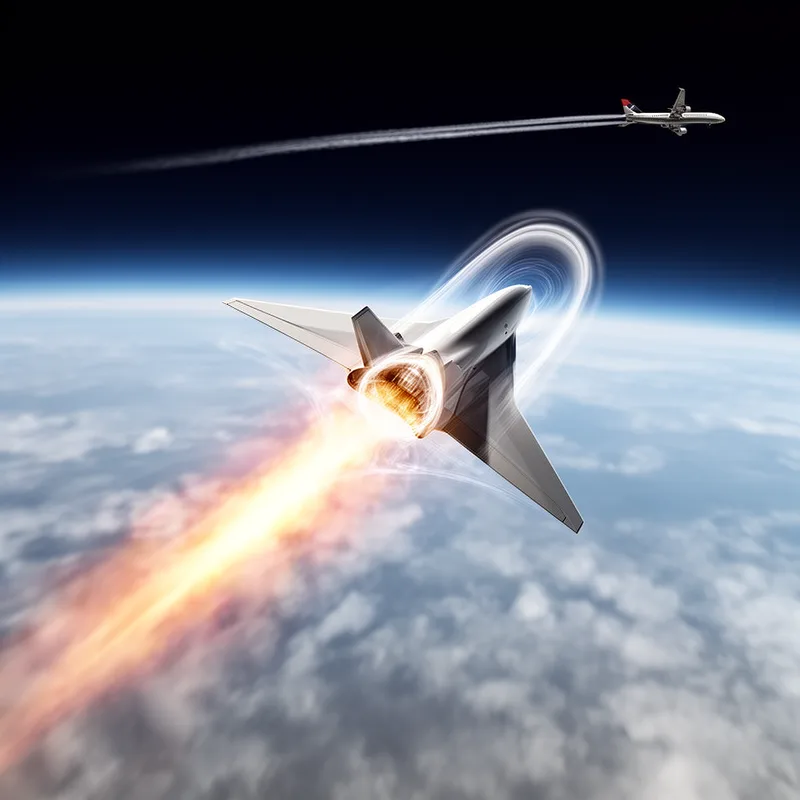
hypersonic
 4
7.8
4
7.8

- adjective
- /ˌhaɪpərˈsɒnɪk/
- Specialized
- We visited the hypersonic wind tunnel in UTSA last year to meet with Doctor Chris Combs to make AU Haul go hypersonic just for the laugh.
- hypersonic vehicle
- hypersonic aircraft
- hypersonic flight
Loading YouTube…
Watch on YouTubeThe issue with hypersonic flying is what physicists call stagnation points.
- The issue with hypersonic flying is what physicists call stagnation points.
Examples
-
The new hypersonic missile can travel faster than five times the speed of sound.
-
But modern hypersonic aircraft, even restricted by the ozone laws, just streaked on by.
Fiction book (1990) -
What about the hypersonic aircraft the Air Force has been testing?
Blog text (11) -
Their missions range from hypersonic flight to space launch.
Academic text (1994) -
Because jets travel at hypersonic speeds, they produce their own shock waves, cooking the gas in their wake.
Academic text (1996) -
In May, he called on Russia's defense industry to develop hypersonic air-breathing weapons as a future strike system.
Blog text (2) -
EARLY CONCEPTS: The X-15 rocketplane (above) provided key insights into hypersonic flight.
Academic text (2011) -
Another local user of helium is the Buffalo-based research hub Cubrc and its supersonic and hypersonic test facilities.
Blog text (6) -
And so you're going through this entire aerodynamic regime down to through hypersonic, supersonic, transonic, subsonic.
-
Launched from an expendable rocket, this delta-wing vehicle would use hypersonic lift to bounce off the atmosphere to lose speed before re-entry and glide to a landing.
Academic text (2011)
Synonyms
 100
3.2
100
3.2
Able to work or move much faster than normal
 12
6.7
12
6.7
Faster than the speed of sound in air
 5
5.7
5
5.7
Moving or working much faster than similar things
Antonyms

How Fast

Surface Forms
Morphology
hypersonic = sonic (transparent) = hyper + son + ic
The meaning is directly built from 'hyper-' plus 'sonic', referring to something beyond ordinary sonic speed.
Etymology
The word hypersonic is made of the parts hyper-, as in hyperactive, meaning 'over', and sonic meaning 'sound'. So it describes something moving faster than sound, usually more than five times the speed of sound.