
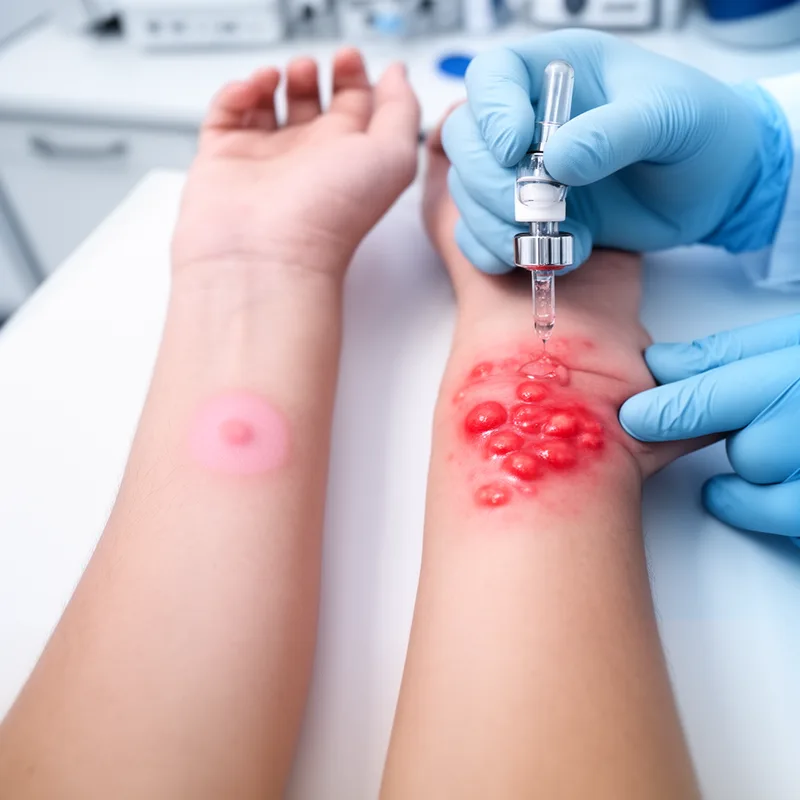
to hypersensitize
- verb
- /ˌhaɪpərˈsɛnɪˌtaɪz/
- Specialized
- Many children can become hypersensitized to certain foods, leading to severe allergic reactions.
Examples
-
Some patients may hypersensitize to medications, requiring careful monitoring to avoid adverse effects.
-
The doctor explained that overexposure to certain chemicals can hypersensitize the immune system.
-
They argued that those who claimed to be negatively affected by grass smoke were already hypersensitized and that the true impacts of burning could not be clearly defined.
Academic text (1998)
Synonyms
 3
6.1
3
6.1

Make a person more likely to react to something like an allergen or idea

To make someone or something too sensitive to things like light and noise

To make a person or animal more likely to react to touch and strong feelings

To make people more aware of a problem or idea
Antonyms
 10
6.3
10
6.3
To make people and animals feel less strong reactions to pain, fear or loud sounds, often by repeated exposure
How Sensitive

Surface Forms
Morphology
hypersensitize = sensitize (transparent) = hyper + sensit + ize
The meaning is a direct combination of 'hyper-' meaning excessively and 'sensitize' meaning make sensitive.
Etymology
The word hypersensitize has the prefix hyper-, as in hyperactive, meaning 'too much', and sensitize, from sense, as in sensitive, meaning 'to feel'. So to hypersensitize a person or animal is to make them 'feel' things too strongly, which explains strong skin or allergy reactions.