

hyperfunction
- noun
- /ˌhaɪpərˈfʌŋkʃən/
- Specialized
- The goal of this study was to characterize the relationship between RFF and listener perception of VE and OS in individuals with varying degrees of vocal hyperfunction.
- vocal hyperfunction
- degrees of hyperfunction
- associated with hyperfunction
Examples
-
Thus, the greatest strength of RFF as a clinical assessment tool may be as a general identifier of individuals with voice disorders (including possible vocal hyperfunction), even at the mild end of the spectrum.
Academic text (2012) -
Last, although much of the study of vocal hyperfunction has focused on identifying specific measures that may differentiate between disordered individuals and healthy controls, the clinical need goes beyond the capability to identify or diagnose vocal hyperfunction.
Academic text (2011) -
In addition, the results support the possibility of using RFF as a sensitive indicator for those voice disorders that are commonly associated with vocal hyperfunction.
Academic text (2012) -
There is a need for relatively noninvasive objective clinical assays of vocal hyperfunction to allow for repeated assessment throughout the voice therapy process in order to identify progress.
Academic text (2011) -
Although these results seem promising, it is yet unknown how RFF relates to perceived VE or OS among individuals with varying degrees of hyperfunction.
Academic text (2012) -
Method: Thirty women diagnosed with voice disorders commonly associated with vocal hyperfunction and 10 healthy women provided speech samples that were used to obtain parameters of RFF.
Academic text (2012) -
When considered together with the findings of previous studies, our results also support the contention that offset RFF differs in individuals with voice disorders that are associated with vocal hyperfunction relative to individuals with healthy voices.
Academic text (2012) -
Furthermore, even if the degree of strain in our participants was more like that seen in individuals with vocal hyperfunction, it is very possible that the physiological adjustments they used to mimic hyperfunctional voice may differ from the physiological configuration used by patients with vocal hyperfunction.
Academic text (2011) -
Although RFF appears to be associated with voice disorder, it does not appear to be sensitive to changes in the magnitude of vocal hyperfunction perceived by other listeners, such as the differences between normal and mildly rated VE (see Figure 4).
Academic text (2012) -
Vocal hyperfunction can lead to strain and discomfort in the voice during speaking or singing.
Synonyms


 1
5.3
1
5.3
A body part or process working more than normal
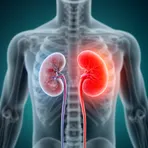
An organ that works harder to make up for another's weakness
Antonyms

- Specialized
1
9.3
A condition in which an organ or body part has less than normal activity
How Active
- Specialized

- Specialized
1
9.3
Surface Forms
Morphology
Etymology
Hyperfunction comes from Greek hyper- 'over' and function 'work', so in medicine it means an organ is doing 'too much' work or is overly active, much like the word hyperactive which means 'too active'.